Roy Lichtenstein

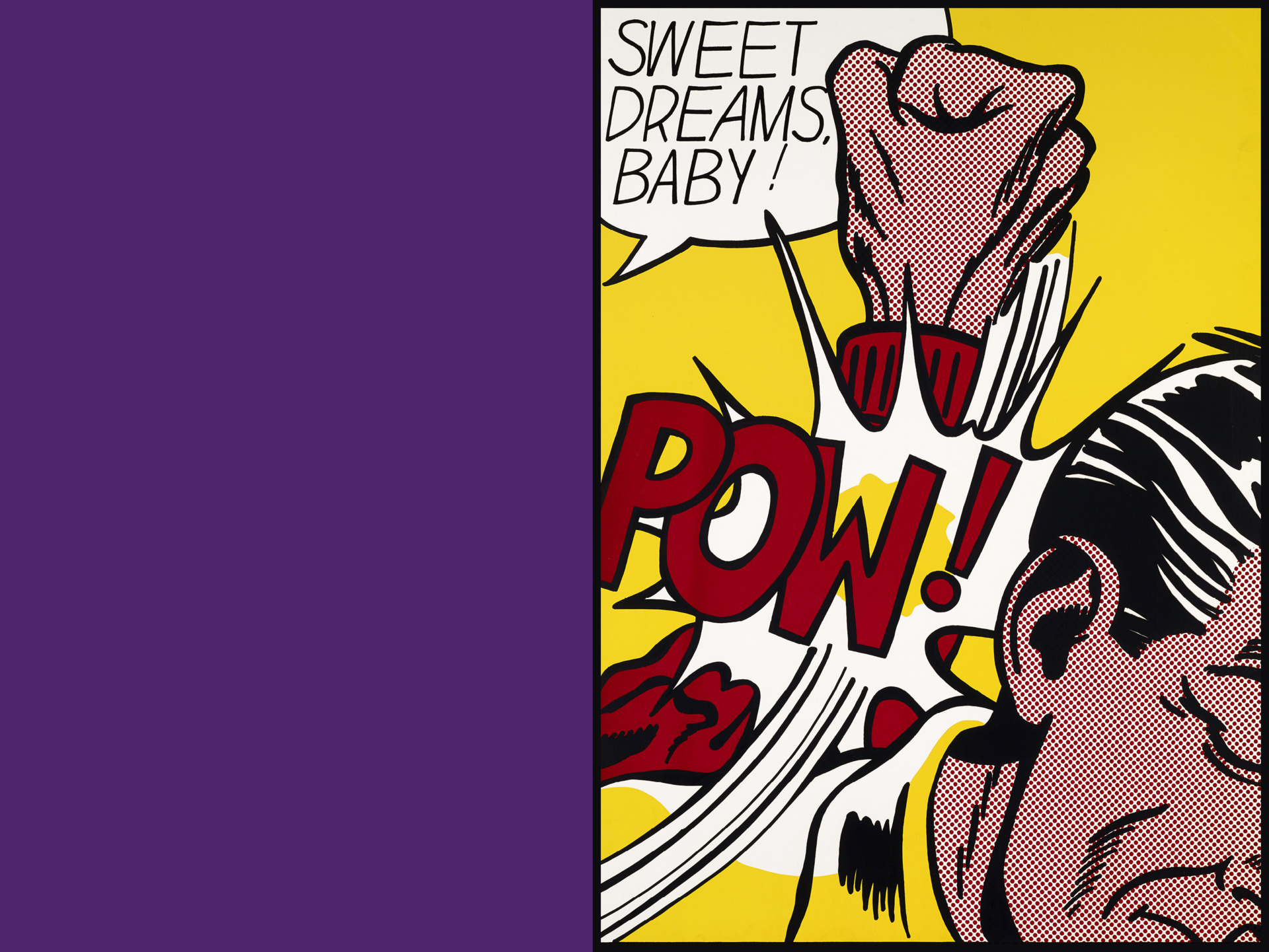
Sweet Dreams, Baby!

NEUBAU / 22.08.2026–14.03.2027 / Curated by Fabienne Ruppen

The Kunstmuseum Basel presents prints from all periods of the pop-art legend Roy Lichtenstein’s (1923–1997) oeuvre. Many of the approximately fifty works have never been on public display. The exhibition is held on occasion of a generous gift from the Roy Lichtenstein Foundation, thanks to which the Kunstmuseum’s Kupferstichkabinett (Department of Prints and Drawings) now has one of the most important collections of Lichtenstein’s work outside the United States.

Roy Lichtenstein. Sweet Dreams, Baby! showcases a representative survey of Lichtenstein’s colorful and vibrant world. The exhibition sheds light on how the American artist became a pioneer of pop art (short for “popular,” in the sense of popular culture) in the 1960s with his catchy motifs, love of experimentation, and brilliant technique. With plenty of wit and irony, Lichtenstein transposes the visual language of consumer goods, advertising brochures, and store-window displays into visual art. The comic-book aesthetic, in particular, is a vital source of inspiration: enlarged details (close-ups), luminous colors, and Ben-Day dots become hallmarks of his art.

The New York art scene initially responds to pop art with shock, perceiving it as banal. Meanwhile, the familiar imagery of this new mode of creative expression appeals to a wide audience, in no small part due to the medium of printmaking and its reproducibility: Lichtenstein’s first prints featuring the comic-book aesthetic are posters and invitations for his exhibitions at the Leo Castelli Gallery in New York. They are printed inexpensively in large runs and make the artist a household name.

Lichtenstein’s interest in printmaking dates back to his student years. The exhibition includes six examples from the late 1940s and early 1950s that illustrate the rigor of his experimentation with various printmaking techniques early in his career. From the late 1960s onward, he collaborates with renowned printing studios such as Gemini Graphic Editions Limited, Los Angeles; Tyler Graphics, Bedford, N.Y.; and Graphicstudio at the University of South Florida, Tampa. In close consultation with their staff, he produces technically masterful individual prints and series. Portrait (1989), for instance, is the result of an eighteen-step printing process. The combination of four different techniques—lithography, woodcut, screen printing, and wax printing, which was developed specifically for this project by Graphicstudio—produces exceptionally varied surface effects ranging from mat areas to glossy and iridescent spots to fluid-looking brushstroke motifs.

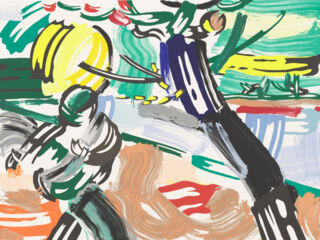
In the course of five decades, Lichtenstein creates over 350 screen prints, etchings, lithographs, woodcuts, and linocuts. In celebration of the artist’s centennial in 2023, the Roy Lichtenstein Foundation has given a total of approximately one hundred prints to the Albertina in Vienna, the British Museum in London, and the Kunstmuseum Basel, establishing three reference collections in Europe. The Kunstmuseum received thirty-three works that showcase the full diversity of Lichtenstein’s oeuvre as a printmaker. These include printed Paper Plates (1969) as well as an unconventional reinterpretation of Vincent van Gogh’s The Sower (1985) and the monumental Wallpaper with Blue Floor Interior (1992).

The exhibition Roy Lichtenstein. Sweet Dreams, Baby! brings the public debut of this gift in Basel. It is rounded out by additional prints by Lichtenstein from the Kunstmuseum’s Kupferstichkabinett, which began acquiring his work in the 1960s, and the paintings Hopeless (1963) and Mirror #2 (1970), both of which are on permanent loan to the Kunstmuseum.

The Roy Lichtenstein Foundation was established in 1998 by Dorothy Lichtenstein (1939–2024), the artist’s widow. Its mission is to make his work accessible to the public, including by producing a continually updated online catalogue raisonné.

Sections of the Exhibition

Room 1: Roy Lichtenstein and Pop Art Printmaking

With the advent of Pop Art (short for “popular”, in the sense of popular culture) in the 1950s, the imagery of everyday life found its way into art. After World War II (1939–1945), the United States experienced profound social contradictions. On the one hand, the Civil Rights Movement gained strength, household appliances such as televisions and refrigerators were becoming more affordable, and the dawn of space flight inspired hope for the future. But at the same time, the Cold War, the Vietnam War (1955–1975), and the assassination of President John F. Kennedy in 1963 cast this optimism into doubt.

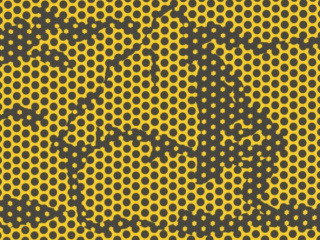
Against this backdrop, the American artist Roy Lichtenstein (1923–1997) made a significant contribution to a new form of expression, transposing the visual language of consumer goods and advertising into fine art with humor and irony. The characteristic features of mass media served as his stylistic devices. In particular, he embraced the aesthetics of comics. Their typical elements—enlarged details, vibrant colors, and patterns of evenlyspaced dots (called Ben-Day dots)—became his trademarks.

The New York art world was initially shocked by Pop Art, perceiving it as trivial. The familiar visual vocabulary, however, attracted a new, broader audience. Printmaking played a significant role in its popularity. Exhibition posters and invitations printed in large quantities made Lichtenstein widely known.

To commemorate the anniversary of the artist’s 100th birthday in 2023, the Roy Lichtenstein Foundation donated 33 prints to the Kupferstichkabinett (Department of Prints and Drawings) at the Kunstmuseum Basel, which are now on display for the first time. They offer a representative overview of Lichtenstein’s body of print work, in which his engaging motifs—rendered in silkscreen prints, etchings, lithographs, woodcuts, and linocuts—are handled with technical virtuosity and a palpable delight in experimentation.

Close
Room 2: Still Lifes — Forms of the Everyday

Pop Art artists were fascinated by simple, everyday objects. Throughout his career, Roy Lichtenstein devoted a great deal of attention to a wide variety of foodstuffs as well as items of furniture. He was particularly intrigued by glasses and mirrors, abstracting their transparent or reflective surfaces into dots and straight lines.

The still lifes vividly illustrate the breadth of Lichtenstein’s formal vocabulary. Aside from the Ben-Day dots, it also includes caricaturishly exaggerated brushstrokes. The brushstroke is the mark of the artist’s hand and is ultimately a symbol of painting as such. It played an especially significant role in Abstract Expressionist painting in the USA from the late 1940s to the 1960s. The painters of this movement sought not so much to represent a recognizable motif but rather to express emotions through bold brushwork and color. Lichtenstein took the highly individual and seemingly spontaneous painterly gesture to the point of absurdity by laboriously constructing it and transposing it into the anonymous aesthetic of the comic book.

Close
Room 4: Innovation — Collaboration as a Creative Motor

In the late 1960s, Roy Lichtenstein began to engage more rigorously with art history, focusing particularly on the question of what defines artistic style. He identified the essential features of various modern Western art movements and incorporated them into his own artistic vocabulary. Magnification, simplification, and schematization give iconic masterpieces the appearance of massproduced items. Through such reinterpretation, Lichtenstein highlighted how art that was once radical had long since found its way into popular culture.

Around the same time, Lichtenstein began collaborating with professional print studios such as Gemini G.E.L. (Graphic Editions Limited) in Los Angeles. Their technical expertise lent his prints an unprecedented level of precision. From then on, in addition to individual prints, he would also produce annual series of six to eight prints. Thanks to the reproducibility of prints, the same motif could be explored in various ways, for instance in different color variations.

Close
Room 3: New Interpretations — Pop Art Meets Art History

In the 1960s, so many painters and sculptors in the United States began experimenting with printmaking that the period came to be known as a print revival (the so-called “Print Renaissance”). Roy Lichtenstein, however, had already been familiar with a wide variety of techniques from his student days in the 1940s. As his works grew in complexity, he became increasingly more involved in the printing process. His long-standing collaboration with highly professional print studios motivated him to continually explore the potential of printmaking anew.

The rendering of these works, which sometimes required over 30 printing passes, was extremely demanding and often took several months. A common feature of many of these pieces is the combination of different printmaking techniques. Each technique creates specific surface effects. The layering of glossy, matte, flat, and relieflike textures lends Lichtenstein’s prints a sensual, threedimensional quality.

Close
Room 5: Decoration — Pop Art For Your Home

Pop Art drew its motifs and materials from contemporary everyday life in the US. In turn, Pop Art works then became part of that everyday life themselves. Aside from paper plates, Roy Lichtenstein designed printed fabrics and T-shirts, wrapping paper, and wallpaper. He conceived of his art as a practical enrichment of life and created numerous murals and sculptures for public spaces as well.

In keeping with this idea, Lichtenstein also explored architectural motifs. Repeatedly emphasizing the tension between three-dimensional space and the two-dimensional picture plane, he humorously thematized the gap between reality and representation. Art and life were for him understood equally as fiction. His entire body of work can be seen as a commentary on consumer culture and the notion that money and material possessions bring happiness.

Close
Room 6: Welcome to the Lichtenstein Lounge

Have a seat and immerse yourself in publications about Roy Lichtenstein’s art! Or create your own compositions using brushstrokes, dots, and grids on the magnetic board. Lichtenstein prepared many of his prints using collages, layering colored papers and patterns one on top of another and moving them around in whatever configuration he pleased. The two exhibition posters from Bern and Stuttgart are representative of the numerous opportunities European audiences had to discover Lichtenstein early in his career.

The two posters for exhibitions in New York, for their part, were sent out as invitations or sold as limited editions. These affordable prints are one reason why Lichtenstein’s art can still be found in many living rooms today.

Close

Events for this exhibition

Sat 22 Aug

WORKSHOP FÜR KINDER

HAUPTBAU
14:00–16:30

Kinderworkshop: «POW! HUCH… WOW!»

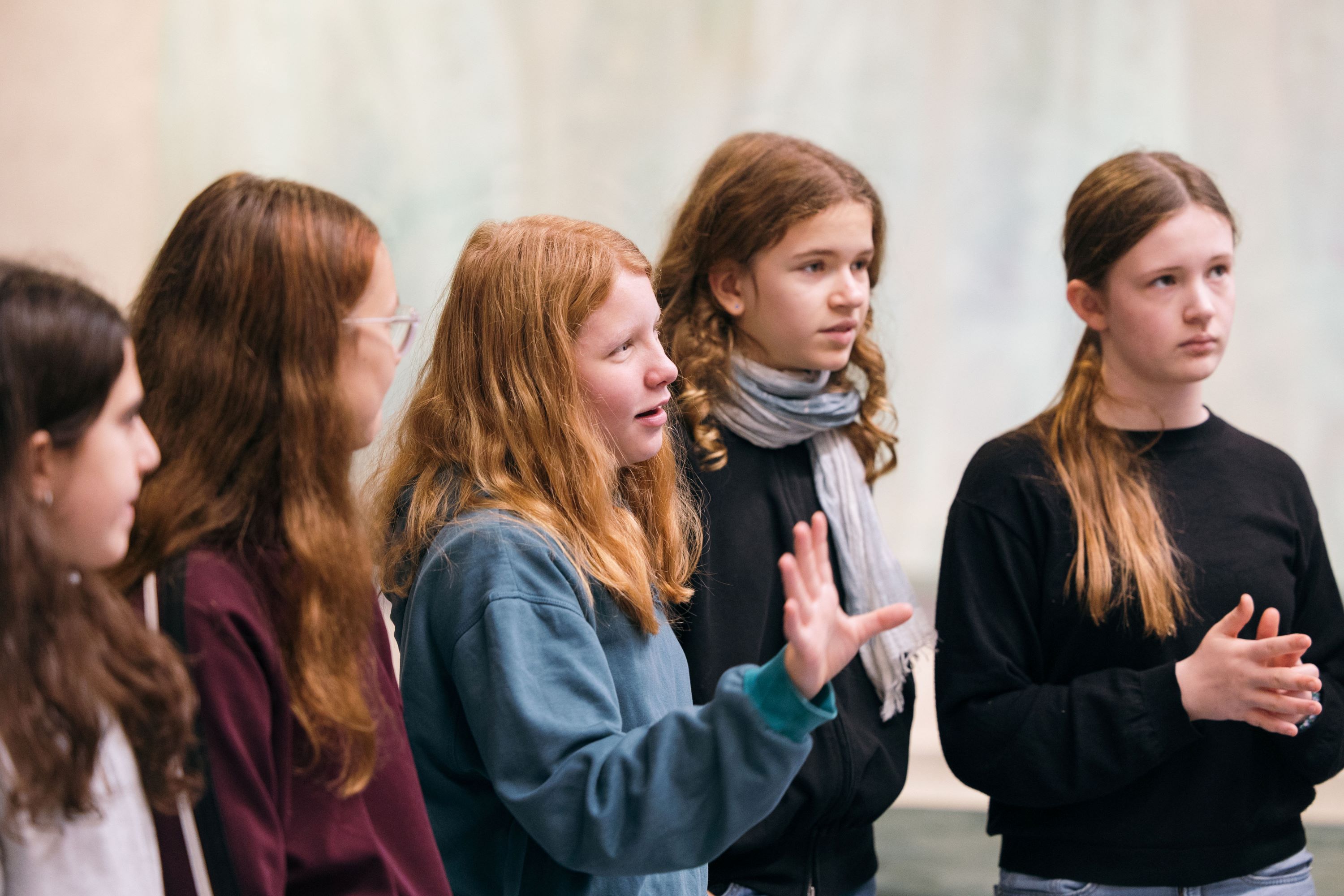
In German. Ob Held:innengeschichten oder persönliche Alltagsbeobachtungen: erzähle Deine Geschichten in nur wenigen Bildern. Anlässlich der neuen Ausstellung des Künstlers Roy Lichtensteins erkunden wir die Welt der Comics und bringen fantastische Abenteuer und grosse Gefühle in kleinen Zines auf Papier. Alter: 7-10 Jahren. Kosten: CHF 15 / mit Familienpass CHF 10, Ticket erforderlich via Ticketlink.

Wed 26 Aug

CURATOR'S TOUR

NEUBAU
18:30–19:30

Kuratorinnenführung: «Roy Lichtenstein. Sweet Dreams, Baby!»

In German. Führung in der Ausstellung mit der Kuratorin Fabienne Ruppen. Kosten: Eintritt + CHF 7
Sun 27 Sep

GUIDED TOUR

NEUBAU
15:00–16:00

Führung in der Ausstellung «Roy Lichtenstein. Sweet Dreams, Baby!»

In German. Kosten: Eintritt + CHF 7
Tue 6 Oct

GUIDED TOUR

NEUBAU
12:30–13:00

30 Minuten: Drucktechniken in Roy Lichtensteins «Brushstroke Figures»

In German. mit dem wissenschaftlichen Mitarbeiter Gerry Fässler. Kosten: Eintritt
Wed 7 Oct

WORKSHOP

HAUPTBAU
17:00–20:00

Mitmach-Mittwoch: Comics and Other Stories

The term “comic” first appeared in the 18th century to describe humorous drawings. Inspired by Roy Lichtenstein, who was also deeply interested in this medium, we use painterly enlargements to shed new light on a wide variety of perspectives, details, and motifs from the museum’s collection and tell new stories. Ages 14 and up. Participation free of charge, no registration recquired

Sun 25 Oct

GUIDED TOUR

NEUBAU
15:00–16:00

Führung in der Ausstellung «Roy Lichtenstein. Sweet Dreams, Baby!»

In German. Kosten: Eintritt + CHF 7