New Constellations
Artworks from the Collection
Art does more than reflect its time; it asks questions that cut across eras. This room brings together works from the sixteenth century to today, drawn from the collections of the Kunstmuseum Basel and the Emanuel Hoffmann Foundation. They share a focus on the darker sides of our existence: war and conflict, violence and destruction, and, ultimately, transience. The central, monumental installation functions as a conceptual crux. Its interplay of allure, threat, containment, and control shaped the thinking behind the room’s transhistorical selection of artworks.
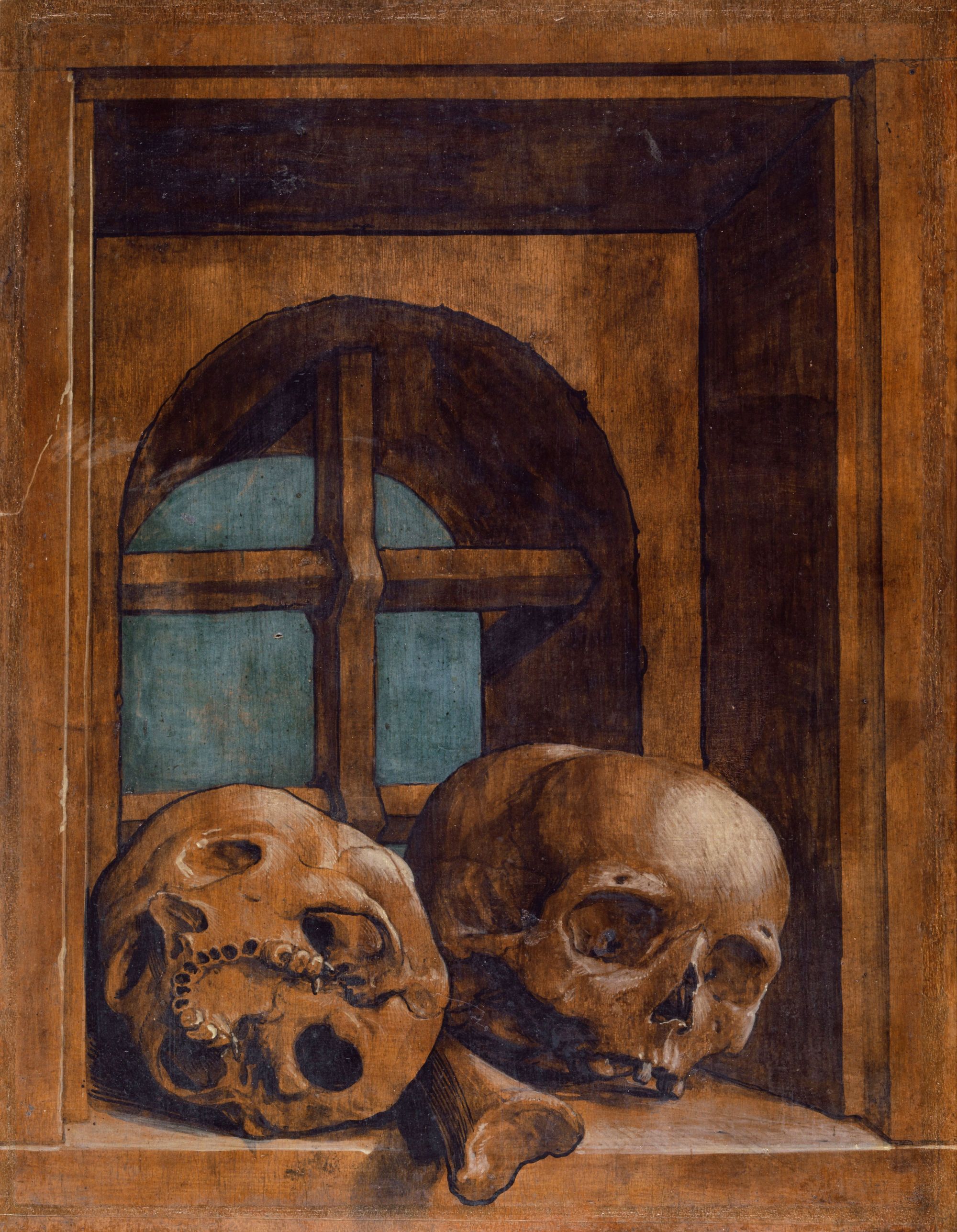
Hans Holbein the Younger, Two Skulls in a Window Niche, around 1520, Kunstmuseum Basel, Amerbach-Kabinett, Photo: Martin P. Bühler
Hans Holbein the Younger (ca. 1497/98–1543), for example, uses symbolically charged motifs such as skulls to refer to the inevitability of death. Lotti Krauss (1912–1985) and Niklaus Stoecklin (1896–1982) respond to the devastation of the First World War with stark depictions of war-scarred nature, which becomes a surrogate for human suffering. Mortality, control, and the use of power shape the works of Bruce Nauman (b. 1941), Marianna Simnett (b. 1986), Thomas Struth (b. 1954), and Kaari Upson (1970–2021), each of which focuses on bodies and the forces that act upon them.
This collection presentation opens a space where discomfort, vulnerability, and violence are made visible—not to resolve anything, but to invite reflection on how we respond to the past, to others, and to what we might likely rather not see.
Works by:
Michael Armitage
Miriam Cahn
Francisco de Goya y Lucientes
Niklaus Hasenböhler
Hans Holbein the Younger
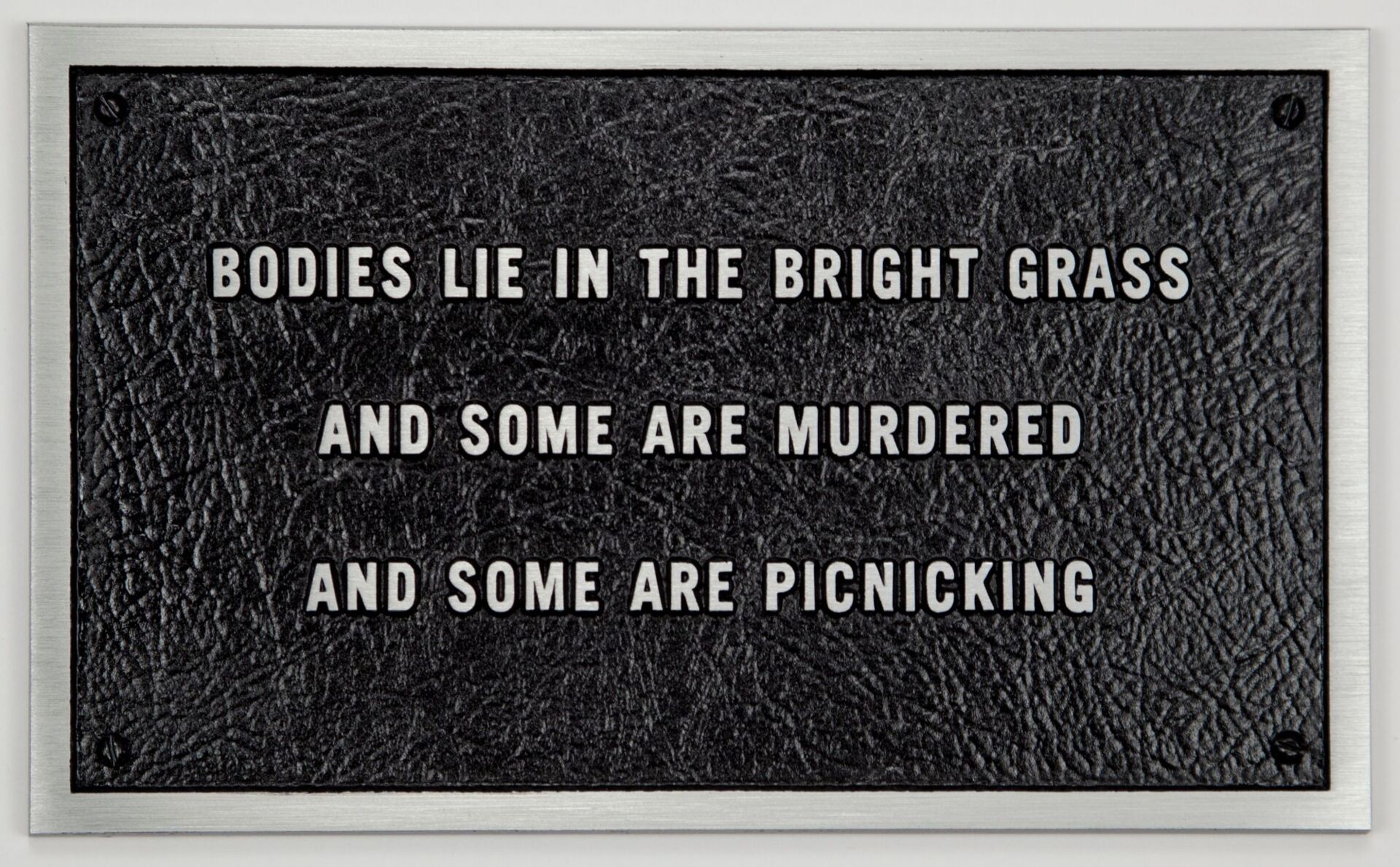
Jenny Holzer
Lotti Krauss
Klara Lidén
Walter Moeschlin
Bruce Nauman
Marianna Simnett
Anselm Stalder
Niklaus Stoecklin
Hinrich Stravius
Thomas Struth
Kaari Upson