Marc Bauer

Fear Rage Desire
Still Standing

NEUBAU, connecting wing / 07.03.2026–02.05.2027 / Curated by Anita Haldemann


The Kunstmuseum Basel presents a project by the internationally renowned Swiss artist Marc Bauer (b. 1975). Bauer’s drawings grapple with history, memory, gender, and identity from a queer perspective. Titled Marc Bauer. Fear Rage Desire, Still Standing, the presentation intertwines motifs from art history, from artists such as Hieronymus Bosch (ca. 1450-1516) and Nasta Rojc (1883-1964), with photographs from the internet and archival material. Bauer’s work focuses on the construction of masculinity and the violence it unleashes in society and—that is the central theme in this project—against queer people in particular. Tracing a long arc from history to the present, he reveals how deeply entrenched such violence is in social structures.

Bauer’s works are based on extensive research: he reads academic literature, delves into archives, and talks to scholars and experts. One of his interlocutors has been Jonathan D. Katz, who organized, researched, and curated the exhibition The First Homosexuals. He then selects images and writings from a variety of sources, which he translates into a very personal and exceptionally fascinating visual universe that is laced with ambiguity and provokes searching reflections.
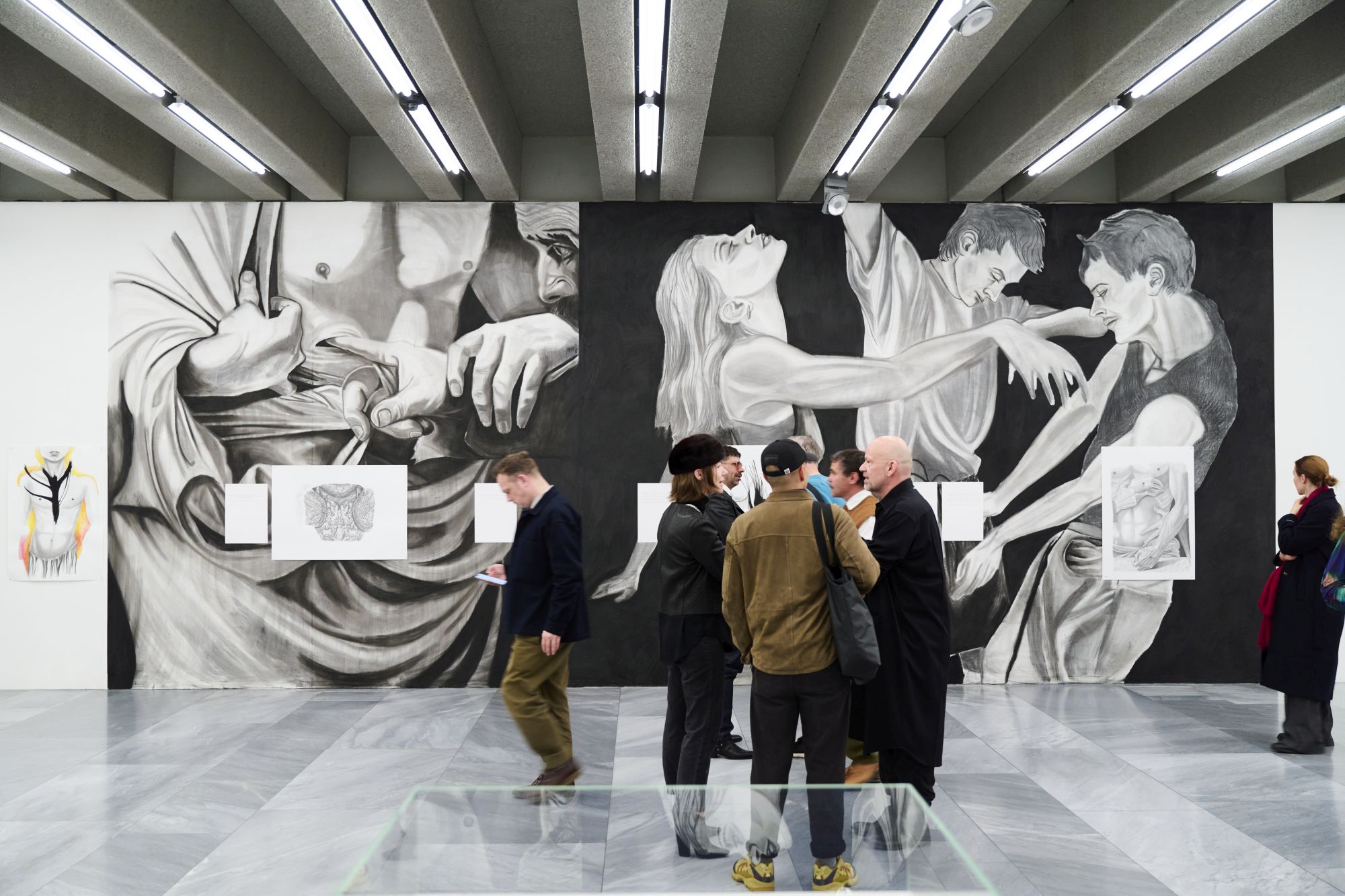
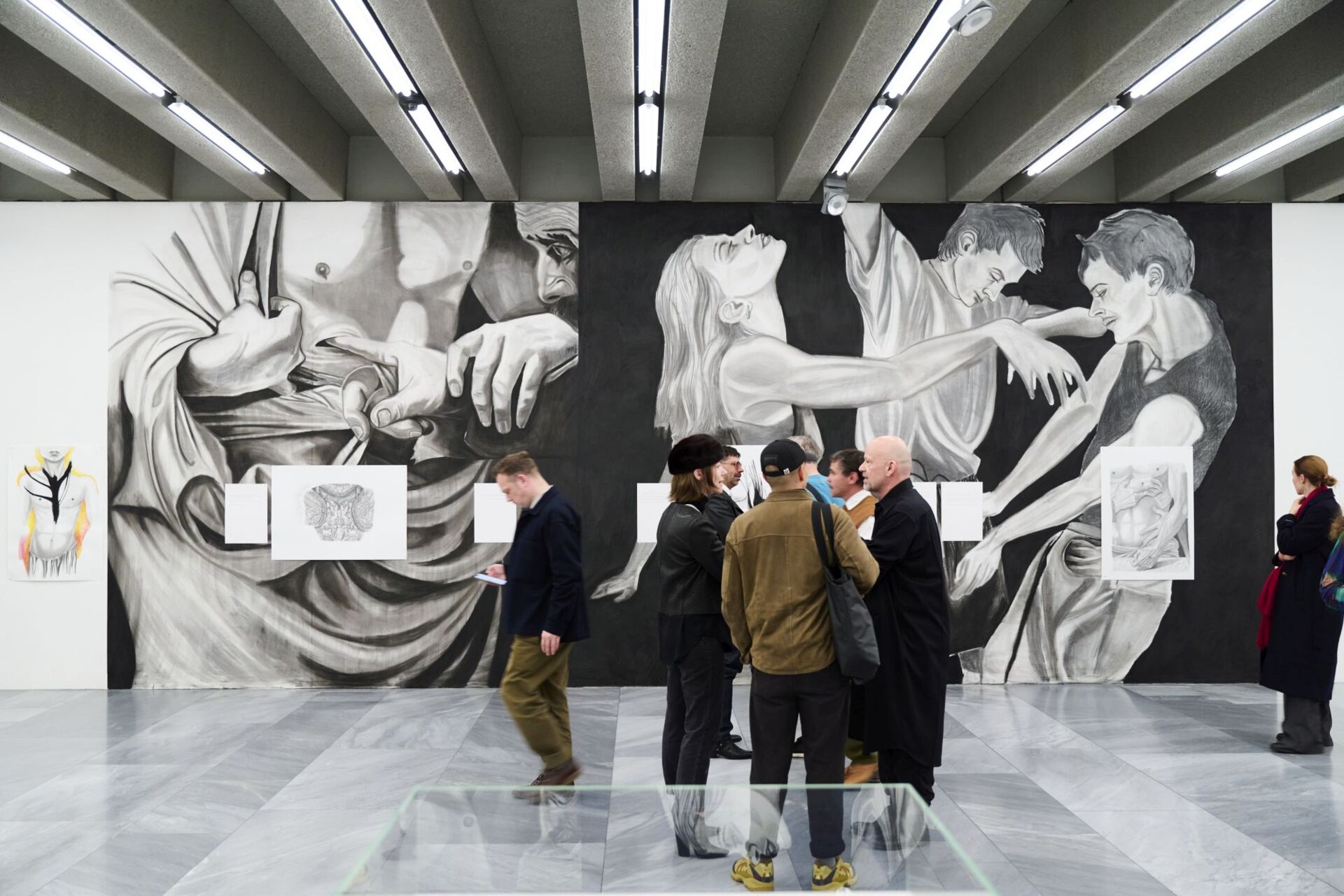
Project view, Marc Bauer. Fear, Rage, Desire. Stil Standing, 2026, Photo: Raphaela Graf

Project view, Marc Bauer. Fear, Rage, Desire. Stil Standing, 2026, Photo: Raphaela Graf


Created right on the museum’s walls, Bauer’s mural drawings are destroyed after the end of an exhibition. Visitors are invited to watch him at work on site starting March 4, 2026. The artist will return on two occasions to rework the wall drawings (May 12–17 and November 3–7, 2026). The presentation combines the murals with drawings on canvas and paper and a soundtrack composed by the Berlin-based artists Sin Maldita (Tim Roth) and Philipp Hülsenbeck for a multimedia installation.

Bauer was invited to create this work on occasion of the exhibition The First Homosexuals. The Birth of New Identities 1869–1939, which is on view at the Neubau from March 7 until August 2, 2026.
On Marc Bauer
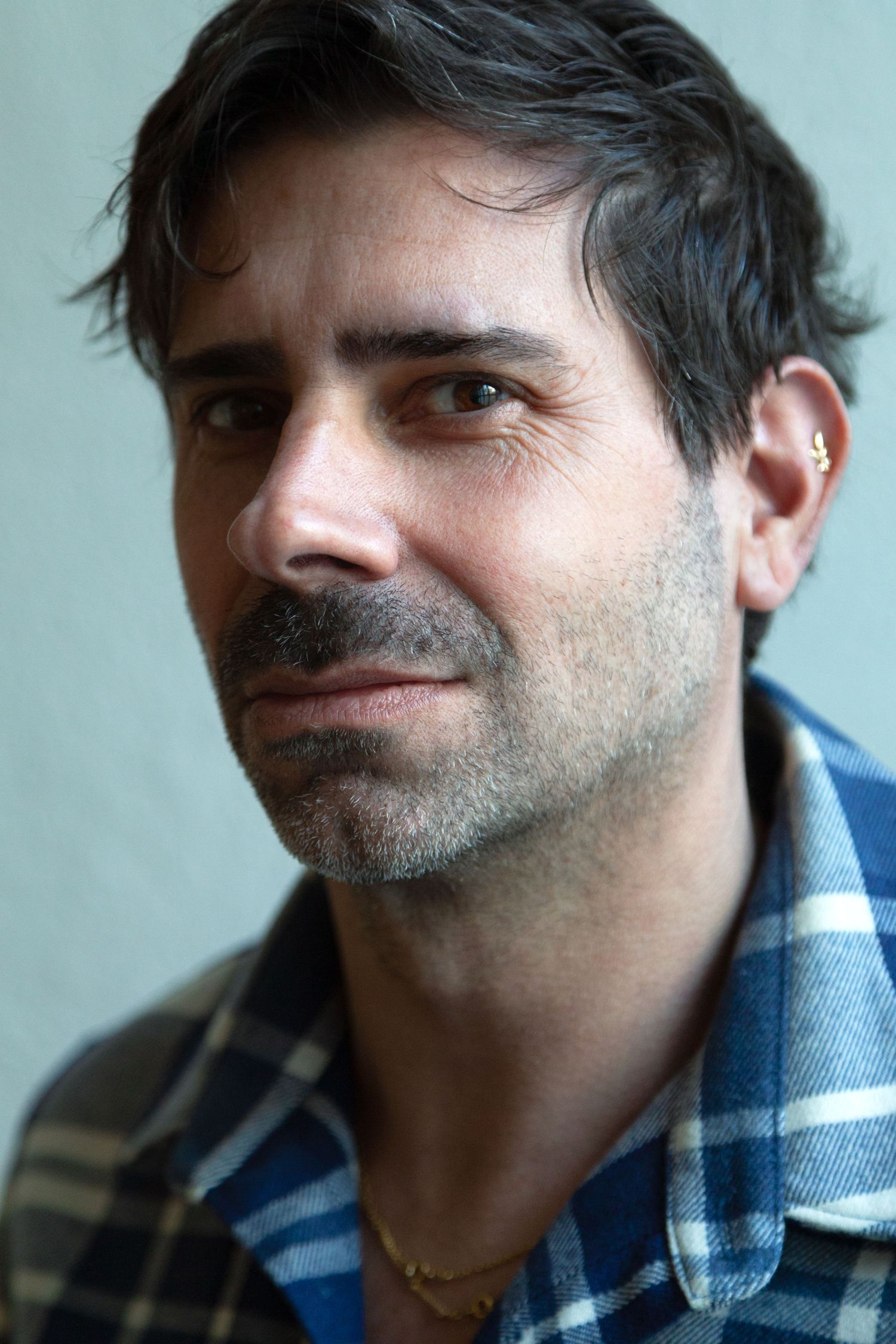
Photo: Vincent van der Marck © Copyright 2026 Studio Marc Bauer.

Photo: Vincent van der Marck © Copyright 2026 Studio Marc Bauer.

Marc Bauer (b. Geneva, 1975) lives and works in Zurich. He studied at the École Supérieure d’Arts Visuels Genève (now HEAD) and at the Rijksakademie van Beeldende Kunsten, Amsterdam. He has been a lecturer at the Zurich University of the Arts (ZHdK) since 2015.

His art has been on display in solo projects at renowned international institutions including the Menil Drawing Institute, Houston (2023–2024); the Berlinische Galerie (2020–2021), Berlin; the Istituto Svizzero, Milan (2020); Drawing Room, London (2019); the Centre Culturel Suisse, Paris (2013), and MAMCO, Geneva (2010). His work has also been showcased in group exhibitions, including at Kunsthaus Zürich (2025, 2019, 2015, and 2008); the Guggenheim Museum Bilbao (2021); the Migros Museum, Zurich (2019 and 2014); S.M.A.K., Ghent (2015), and the Albertina, Vienna (2015). Bauer moreover participated in the 2018 Biennale of Sydney and the 2014 Liverpool Biennial.

He was awarded the Prix Meret Oppenheim in 2020 and the GASAG Art Prize in 2020 and won the Prix Culturel Manor in Geneva in 2009 and Swiss Art Awards in 2001, 2005, and 2006.

Close
Drawings in the Space

Bauer thematizes the historical reference points of his work in the four canvases that hang from the ceiling. Here, the power wielded by politicians and economic elites today is juxtaposed against the early Christian ideal of compassion for the downtrodden. In a parallel exploration, the rise of queer women in the early 20th century is reflected in the self-empowering queer club culture of the younger generation.

Men in Power
For the canvas titled Them (No. 14), Bauer chose to start with a press photo from January 20, 2025: the inauguration of Donald Trump (b. 1946) as the 47th President of the United States in the US capital Washington, D.C. At the start of his term, Trump announced that from then on there would be only two genders. His policies have aimed to abolish the legal recognition of trans and non-binary individuals at the federal level. This has meant promoting discrimination against the entire LGBTQIA+ community in all areas of life, along with exhibiting crude sexism toward women. Attending the inauguration ceremony were the heads of the largest tech companies, who all support Trump’s traditional authoritarian image of masculinity. Bauer smears paint across their faces in an act of rage.

Self-Determination of Queer Women
Bauer pairs this canvas with the work Manifesto (No. 15), which references three works by female artists featured in the exhibition The First Homosexuals: Sarah Bernhardt’s (1844– 1923) Self-Portrait as a Sphinx (1880), Nasta Rojc’s (1883– 1964) self-assured self-portrait in a hunting suit (1912), and the painting by Louise Abbéma (1853–1927) that depicts her together with her life partner, the actress and artist Sarah Bernhardt. These works are an expression of resistance against the patriarchy: confident queer women who determine the course of their own lives and portray themselves as such in their works. At the bottom edge of the canvas, Marc Bauer quotes the SCUM Manifesto (1967) by the US-American feminist writer Valerie Solanas (1936–1988), which blames the catastrophic state of the world on the male gender. Another work by Bauer—a drawing composed of several sheets joined together—features the black swans from Abbéma’s Sarah Bernhardt et Louise Abbéma sur le lac au bois de Boulogne (1883), showcasing their beauty as well as their loyal bond (No. 13). Black swans stand out as an exception in nature and have come to symbolize the rare and unexpected.

Ecstasy as Liberation
At the far end of the room hangs the painting Ecstasy (No. 16), which depicts young people ecstatically dancing. The soundtrack by Sin Maldita and Hülsenbeck is fitting for this party scene. For many LGBTQIA+ people, raves, parties featuring electronic music, serve as safe spaces where social norms and stigmas are temporarily suspended. They foster community, enable emotional intimacy, and create a setting in which sexual and gender identities can be lived and expressed without social pressure.

Humiliation and Exclusion
On the reverse side, Ecstasy finds its counterpart in the pendant painting The Crowd (No. 17). This work is based on the painting The Carrying of the Cross (c. 1510–16), produced by a follower of the artist Hieronymus Bosch (c. 1450–1516). Bauer adopts the radical composition, in which several aspects of Christ’s Passion are depicted simultaneously within the setting of a dense crowd of people: his mockery, physical humiliation, and social exclusion. Christ is not only punished, but also ridiculed, degraded, and dehumanized—a fate that LGBTQIA+ people continue to suffer in many places to this day.

Close
Drawings on the Wall

Along the long wall, Bauer weaves small-format drawings on paper and fragments of personal text into a biographical narrative (Nos. 1–12). The notes, produced during the preparatory phase of the project, complement the images and create an irregular, rhythmic path akin to an obstacle course. These delicate, almost intimate works demand close viewing and draw the audience directly into the artist’s personal story. They form a radical counterpoint to the monumental wall drawings, which draw on familiar motifs from the Christian pictorial tradition (Nos. 18–20).

Childhood
To emphasize the collective dimension of queer experiences, Bauer refrains from depicting the boy in profile as a self-portrait (No. 1). The image is followed by the figure of Babar the Elephant (No. 2)—a reference to the artist’s uncle, who used the children’s book character to make fun of an overweight relative. This uncle, an authoritarian surgeon whose interventions in the human body alienated the child (No. 3), recurs as a leitmotif throughout the series. In another drawing (No. 4), he mocks the boy’s compassion for live-grilled lobsters—a display of “pampering” that he warned was supposedly associated with the “danger” of homosexuality. Such disparagement leaves its mark on the boy: first, Bauer focuses on the flawless yet tormented teenage body (No. 5). The next drawing, depicting a suit of armor, symbolizes the need for protection (No. 6). Its decorative nature, however, masks the fact that defending and protecting oneself can also lead to inner hardening.

The Body
The large-scale wall drawing on the left takes up the motif of “Doubting Thomas” (John 20:24–29), who would not believe in the Resurrection until he had touched Christ’s wounds (No. 19). Bauer links this biblical scene to the figure of his uncle but also interprets it as a singular theme in Western art history: a man’s penetration of another male body. The visual model here is the radical depiction (c. 1601) by Caravaggio (1571–1610), which is famous for its drastic, almost physically palpable “penetration” of the wound.

Desire
The drawings that follow explore desire, touch, vulnerability, and care. They go together with the large central wall drawing (No. 20) depicting three teenagers lost in music. The work thematizes the queer rave culture of the 1980s, which emerged at the height of the crisis caused by the AIDS desease. In the face of stigmatization and loss, these spaces of collective ecstasy became places of existential significance. Raves offered not only joy, but also space for grief, solidarity, and resistance.

Vengeance
The third large-scale wall drawing is based on the painting Judith and Holofernes (1612–13) by Artemisia Gentileschi (1593–1664) (No. 21), which represents a radical reinterpretation of the biblical heroine Judith. Unlike her predecessors, Gentileschi does not portray her as a distant, symbolic figure, but as a woman who commits physical violence as a necessary act of resistance. She embodies courage and the overcoming of male violence.

Identities
The final drawing, At the Edge of the Sea (No. 11), with its enigmatic polyhedron, evokes Albrecht Dürer’s (1471–1528) Melencolia I (1514). The accompanying sheet of text quotes Michel Foucault (1926–1984): “...man would be erased, like a face drawn in the sand at the edge of the sea.” While Foucault was describing the end of a framework of knowledge, the
quote is often applied today to the dissolution of rigid identities. For the LGBTQIA+ community, the naming of one’s own identity is indeed an act of self-empowerment and belonging, but it also entails the compulsion to constantly define oneself within social and medical norms. Bauer’s work poses the question: what if naming were no longer necessary? What if freedom lay beyond categories? Despite the fundamentally melancholic mood of the drawing, the rising sun in the image suggests a future in which identities may dissolve in favor of pure freedom.

Close
The Display Cases

In 2007, Bauer’s book History of Masculinity was published in conjunction with an exhibition at the art space Attitudes in Geneva. Drawing on personal memories, the book and the exhibition explores the connections between male identity and fascist ideologies. Bauer also addresses our relationship to nature by featuring contests in which men pit their rabbits against each other, thereby degrading the animals as objects.

A second display case features drawings that reproduce hate mail from the Swiss Gay Archives. They document the discrimination and violence to which queer people are subjected. In May, the display was supplemented with drawings based on flyers from the now defunct Zurich Rage Club.

Close
Drawing as Statement

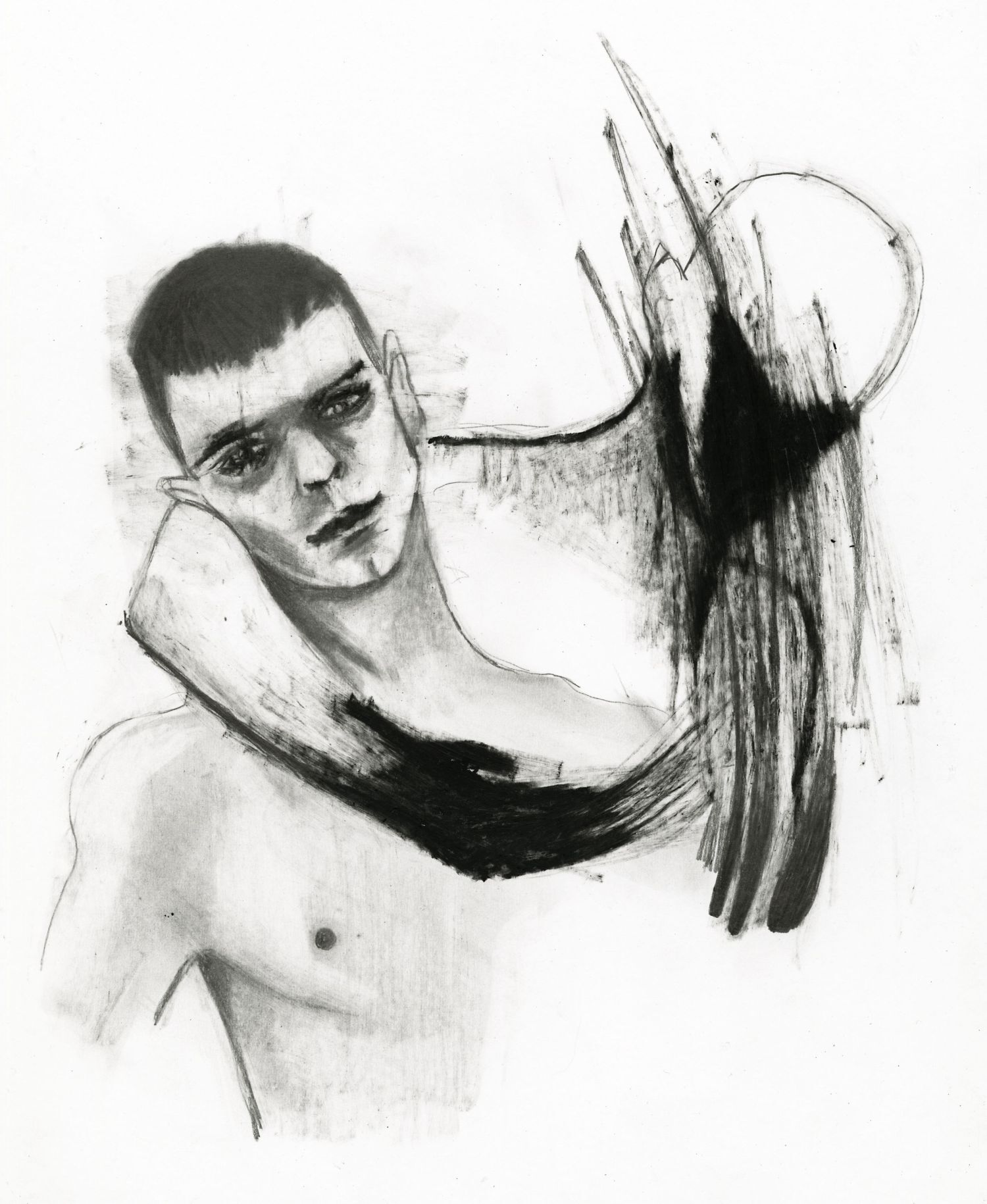
In the installation Fear Rage Desire, Still Standing, drawing becomes an instrument to define space. Bauer employs the full array of drawing techniques—placing on paper sharp, deep black accents with lithographic chalk while producing diffuse, delicate shades of gray with graphite. Sections of the work reminiscent of monumental, high-contrast murals alternate with small-scale, meticulously rendered details. This technical variation allows him to precisely translate the effects of various visual sources, from the blurriness of yellowed family photos to the opulence of art-historical paintings. The variety of styles and visual qualities also reflects the diversity of the source material used.

The creative process remains physically present in the works. Watercolors create ripples in the paper, causing the drawing to lose its two-dimensionality and protrude from the wall as a three-dimensional object. Deliberately left traces, stains, and imperfections emphasize the material immediacy.

A significant portion of the technical execution takes place directly on site: the wall drawings are produced during opening hours with the utmost concentration. The lifespan of the site-specific works is, however, limited in time. They will ultimately be painted over in 2027, making transience an integral part of the artistic strategy.

Close

Events for this exhibition

Sat 20 Jun

GUIDED TOUR

NEUBAU
15:00–16:00

Guided tour of the exhibition «The First Homosexuals»

Costs: Admission + CHF 7

Sun 21 Jun

GUIDED TOUR

NEUBAU
15:00–16:00

Guided tour of the exhibition «The First Homosexuals»

Costs: Admission + CHF 7

Sun 28 Jun

GUIDED TOUR

NEUBAU
15:00–16:00

Führung in der Ausstellung «The First Homosexuals»

In German: Kosten: Eintritt + CHF 7

Sun 12 Jul

GUIDED TOUR

NEUBAU
15:00–16:00

Führung in der Ausstellung «The First Homosexuals»

In German: Kosten: Eintritt + CHF 7

Sun 19 Jul

GUIDED TOUR

NEUBAU
15:00–16:00

Guided tour of the exhibition "The First Homosexuals"

Costs: Admission + CHF 7

Sun 26 Jul

GUIDED TOUR

NEUBAU
15:00–16:00

Führung in der Ausstellung «The First Homosexuals»

In German: Kosten: Eintritt + CHF 7