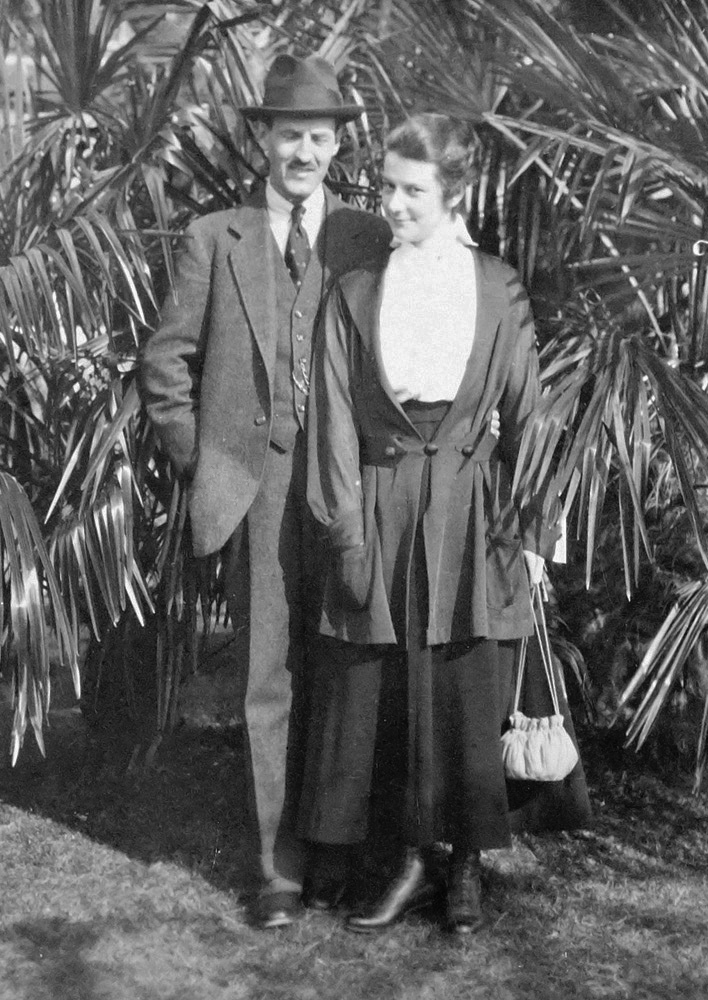
Friendship, Collecting, Connoisseurship
Karl and Marianne Im Obersteg-Buess
The exhibition Friendship, Collecting, Connoisseurship at the Kunstmuseum Basel | Hauptbau spotlights a prime example of personal relationships shaping an art collection. Around forty works of art and a number of letters illustrate the way Karl and Marianne Im Obersteg-Buess's exchanges with artists of their time gave rise to a collection of classical modernism. Visitors will have the opportunity to read some of the letters and listen to others: actors have lent their voices to Karl Im Obersteg and selected artists.
Karl Im Obersteg (1883–1969) and his wife Marianne (1892–1936) were in close contact with the artists Cuno Amiet (1868–1961), Marc Chagall (1887–1985), Ernst Ludwig Kirchner (1880–1938), Alexej von Jawlensky (1864–1941), and Marianne von Werefkin (1860–1938), as well as the dancers Alexander Sacharoff (1886–1963) and Clotilde von Derp Sacharoff (1892–1974). A collection of around 220 works, including paintings, sculptures, and works on paper, as well as an extensive correspondence bear witness to these friendships.
The letters shed light on the exchange of creative inspiration, support in difficult times of war, disputes over copies of works, and shared grief. They also document the planning of exhibitions and show how the Im Oberstegs acquired and resold works and helped facilitate sales.
Established in 1992 by Karl and Marianne’s daughter-in-law Doris Im Obersteg-Lerch (1931–2015), the Im Obersteg Foundation and has been based in Basel since 2004, when the collection was placed on permanent loan at the Kunstmuseum Basel. The foundation’s mission is to preserve the collection and share it with the public through exhibitions and publications.
The presentation Friendship, Collecting, Connoisseurship accompanies the exhibition Van Gogh, Hodler and a Cabriolet. The Collector and Pioneer Gertrud Dübi-Müller, which is concurrently on view at the Kunstmuseum Basel | Neubau (September 19, 2026–February 7, 2027). Although Gertrud Dübi-Müller and Karl Im Obersteg were only casually acquainted, they moved in similar circles. Both were in close contact with Amiet, took painting lessons with him, and collected his works, fostering his art for decades as friends and patrons.
Dübi-Müller’s collection is now housed at the Kunstmuseum Solothurn. This makes both the Im Obersteg-Buess' and Gertrud Dübi-Müller exponents of a tradition in collecting that emerged in Switzerland in the early twentieth century: close relationships with artists sustained the growth of private collections that are now on view in public museums as permanent loans or bequests.