Vera Molnár
Possibilities
With Vera Molnár. Possibilities, the Kunstmuseum Basel offers insight into the printmaking oeuvre of the grande dame of computer art. The 28 editions on display, which include some multi-part works, were produced between 1991 and 2023 at the Atelier of Éditions FANAL in Basel.
Vera Molnár (1924–2023) was fascinated by what happens to a geometric form when one of its features is slightly altered. To make such alterations, in 1959 she began using her “machine imaginaire” to calculate the next steps of her compositions, one step at a time – in her head. It was not until 1968 that Molnár had the opportunity to work with a computer for the first time. The computational power of the machines enabled “a systematic investigation of the infinite field of possibilities.” The computer remained an important tool for her formal experiments throughout her life. Her plotter drawings made her a pioneer of media art.
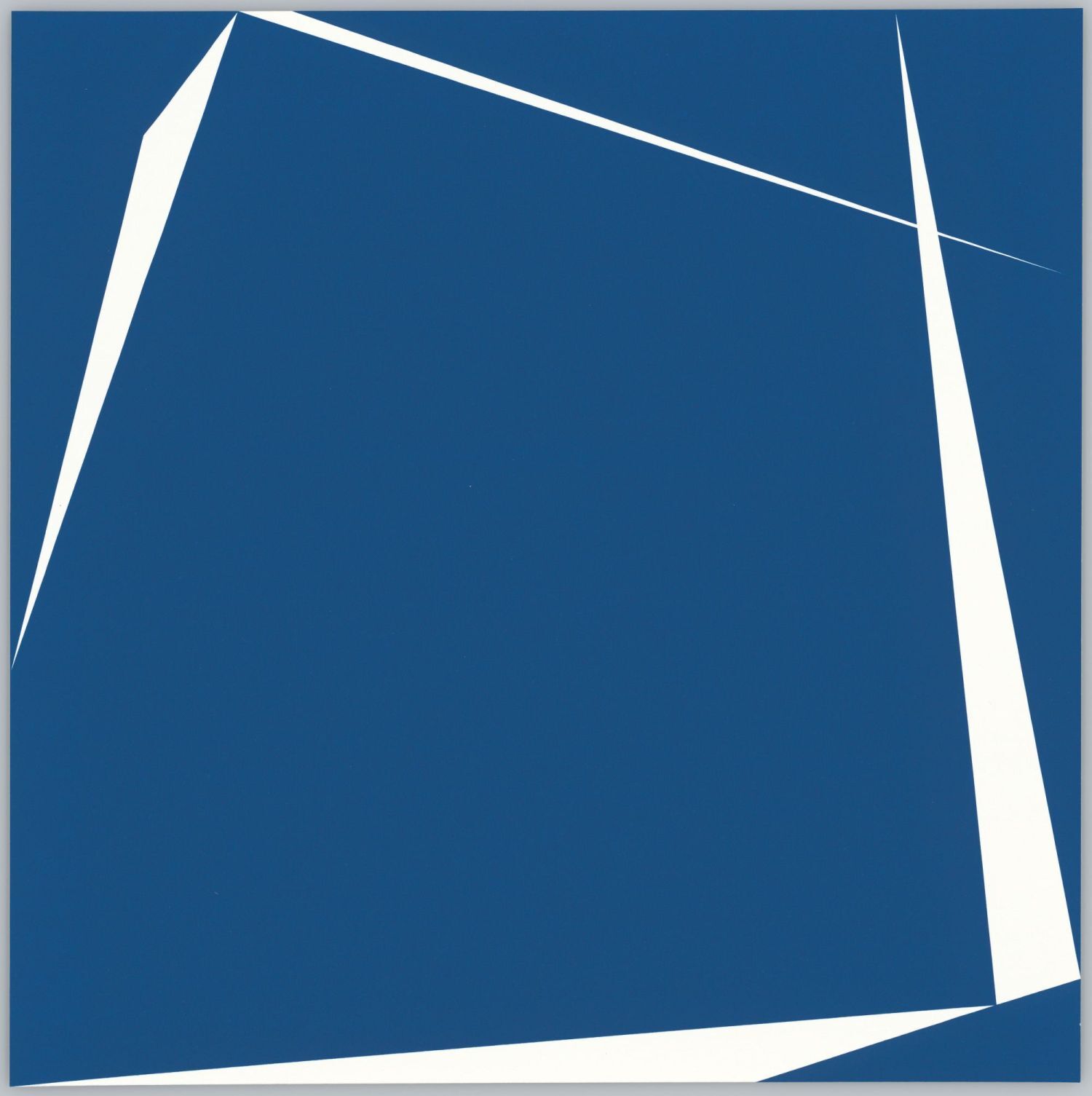
Geometric representations were already a prominent feature in Molnár’s work when the Budapest native moved to her adopted home of Paris in 1947. The artist was particularly fond of working with the square. Its four sides, equal in length and at right angles to each other, convey great stability. Molnár deliberately disturbed this balance. Her works illustrate how shifting individual elements even very slightly can create more unstable arrangements.
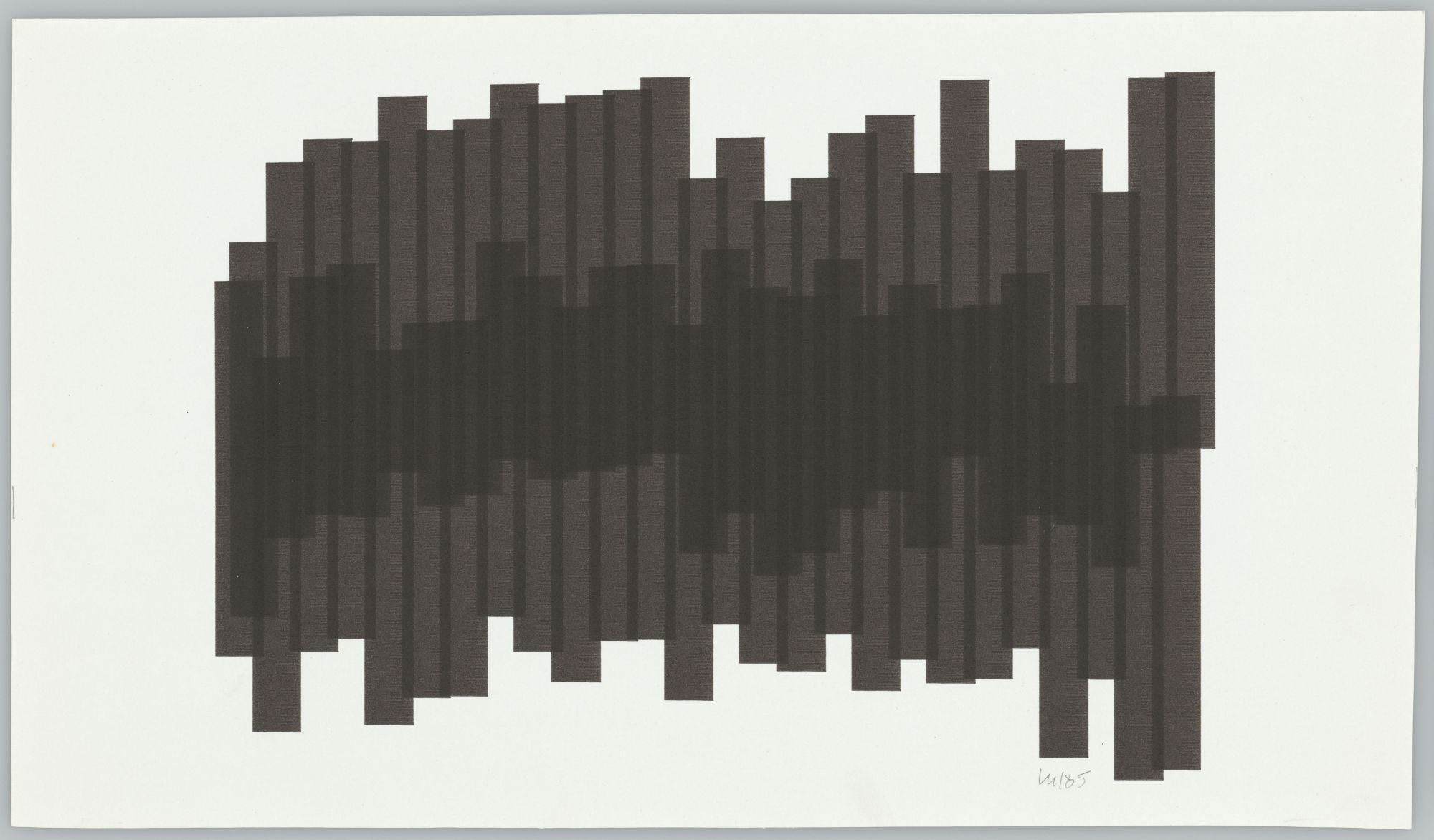
Vera Molnár, 2 rangées de rectangles, 1985, Kunstmuseum Basel, Kupferstichkabinett, Gift Vintage Galéria, Budapest, 2026 © 2026, ProLitteris, Zurich, Photo: Jonas Schaffter
Molnár’s works were often inspired by the everyday impressions she sketched in her journals while traveling on a train or sitting in a café. The white triangles on a blue background in the screen-print series Triangles (2023) seem at first like a rigorous geometric study. In fact, these five compositions are based on the changing shapes made over the course of the day by light falling through the door of Molnár’s room in her retirement home. In that context, the formal investigation takes on a poetic quality, and Molnár’s work encourages attentiveness to one’s own surroundings.
A significant portion of Vera Molnár’s prints were produced in Basel, in the Atelier of Éditions FANAL in the former paper mill in the Sankt Alban Valley. When the studio ceased operations in the spring of 2025, FANAL generously donated an extensive selection of Molnár’s prints to the Kupferstichkabinett Basel (Department of Prints and Drawings). Also on display are two plotter drawings by Molnár, 2 rangées de rectangles (1985) that were donated to the Kupferstichkabinett by the Vintage Galéria in Budapest as a gift on the occasion of the exhibition.
Online Ticket
Buy your ticket now.
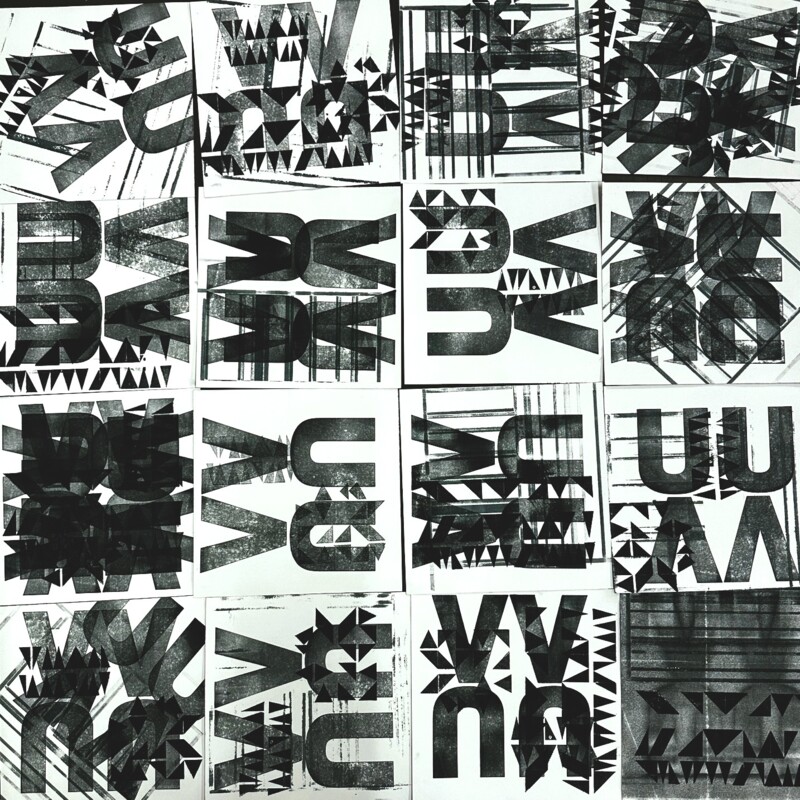
druckwerk as "machine imaginaire". A generative printmaking workshop
On Saturday, May 9, 2026, 11 a.m.–4 p.m. and Sunday, June 7, 2026, 11 a.m.–4 p.m.. Workshop at druckwerk Basel inspired by the exhibition “Vera Molnár. Possibilities.”