Agreement reached on eight artworks from the Julius Freund collection
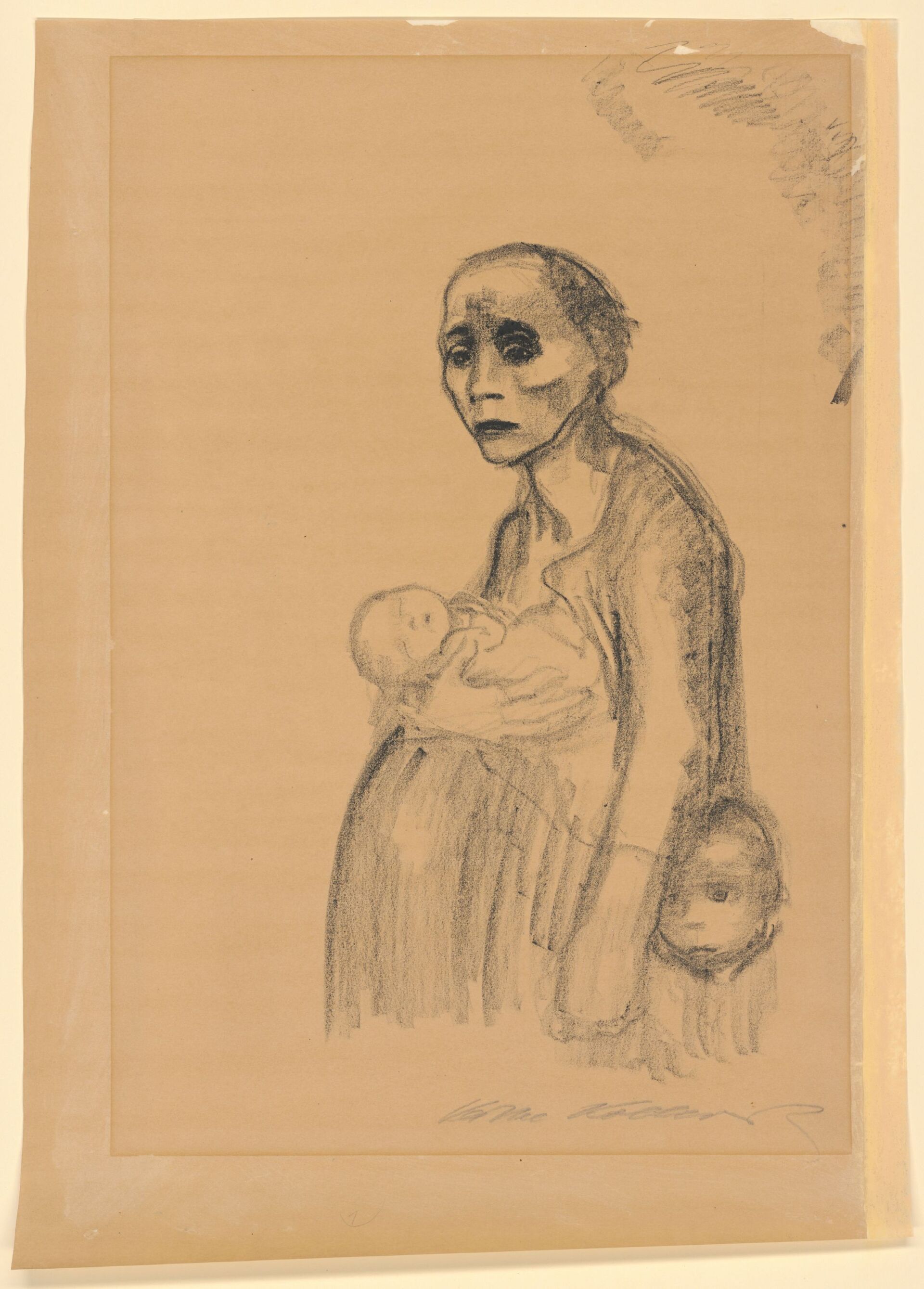
The Kunstmuseum Basel is compensating the heirs of Julius Freund for seven drawings and one lithograph dating from the nineteenth and early twentieth centuries. Its decision in favor of this compensation payment is an acknowledgment of the Washington Principles and an affirmation of its own provenance research strategy. The Kunstmuseum is delighted to be able to keep for works for its collection. The solution also reflects the wishes of the heirs.
Julius Freund (1869–1941) was a German-Jewish textile manufacturer of Berlin. Over a period of twenty-five years, he amassed more than 700 Realist and German Romanticist paintings and works on paper as well as works by selected exponents of early twentieth-century art. His collection encompassed examples by such artists as Carl Blechen, Adolph von Menzel, Caspar David Friedrich, Käthe Kollwitz, and Hans Baluschek. These holdings were known all over Germany for their excellence. To this day, the collector’s stamp “JF” found on many of his works is considered a mark of quality.
After giving up his business in 1931, Freund and his wife Clara (1878–1946) moved to Italy for three years. He envisioned entrusting his entire art collection to a museum during this period. His plan did not succeed until 1933, when he placed 385 works in the custody of the Kunstmuseum Winterthur, where they would remain for nine years. In 1934 and 1936, he added a further 106 works to that group. The Freund collection was extremely popular in Switzerland. Selected works were shown in exhibitions not only in Winterthur but also in the art museums of Lucerne, Bern, and Basel.
After the National Socialist accession to power in 1933, the family’s situation in Germany changed dramatically. The Freunds’ son Hans had to leave the University of Leipzig; after earning his doctorate in Basel in 1934, he emigrated to London. During World War II, he was interned as an enemy alien on the Isle of Man. Their daughter Gisela, who would later come to fame as the photographer Gisèle Freund, fled to Paris in 1933. Julius and Clara Freund returned to Berlin in 1934 and were compelled to pay high discriminatory taxes. They emigrated to England in 1939, where Julius Freund died in an infirmary for the poor in Wigton in 1941.
On March 21, 1942, Gisèle Freund had the portion of her father’s art holdings that were in Switzerland at the time auctioned off by the Auktionshaus Theodor Fischer in Lucerne. As a foresightful means of protecting the collection from direct seizure by the Nazis, her parents had formally transferred ownership of the holdings to her in December 1933, by which time she was in Paris. The decision to sell was taken jointly by the family. By Gisèle’s own account, it had become necessary because her mother Clara Freund had no means of subsistence. The proceeds from the auction went in full to Gisèle, who was meanwhile living in Buenos Aires. She used them to purchase a house, which she rented out to secure an income for her mother from that time onward. At the auction, the Kunstmuseum Basel purchased five drawings and a lithograph for its Department of Prints and Drawings. Two further works of the same provenance entered the museum collection as gifts.
In 2005, the Federal Republic of Germany returned four works to the heirs of Julius Freund. These works had been purchased at the same auction by Hans Posse (1879–1942), Adolf Hitler’s “Special Commissioner for the Führermuseum.” The restitution was justified by the argument that Clara Freund’s financial hardship in exile was to be regarded as a consequence of her persecution under the Nazi regime. The fact that the art had been purchased by a representative of the German Reich presumably also played a role in the decision. Further restitutions by various German museums as well as agreements with private owners followed.
The Kunstmuseum Basel sought contact with the legal representative of the heirs of Julius Freund and reported the ownership of the eight works. After sharing their differing positions on the matter, the two parties arrived at an amicable solution. The community of heirs of Julius Freund will receive a compensation payment and the artworks will remain in the Kunstmuseum Basel. The parties agreed to maintain confidentiality regarding the payment amount.
Transparency for visitors to the Kunstmuseum Basel
The works on paper were on view in the exhibition Unanswered Questions: On the history of drawings from the Department of Prints and Drawings: The Julius Schottländer and Julius Freund collections presented in the exhibition rooms of the Kunstmuseum’s Department of Prints and Drawings. Interested persons can view the drawings in the study room on request.
Further info: