Queer art in our collection
01 Jun 2026
To mark Pride Month, we are showcasing works from the Kunstmuseum Basel’s collection that explore queerness.
Irène Zurkinden,
Friends (1937)
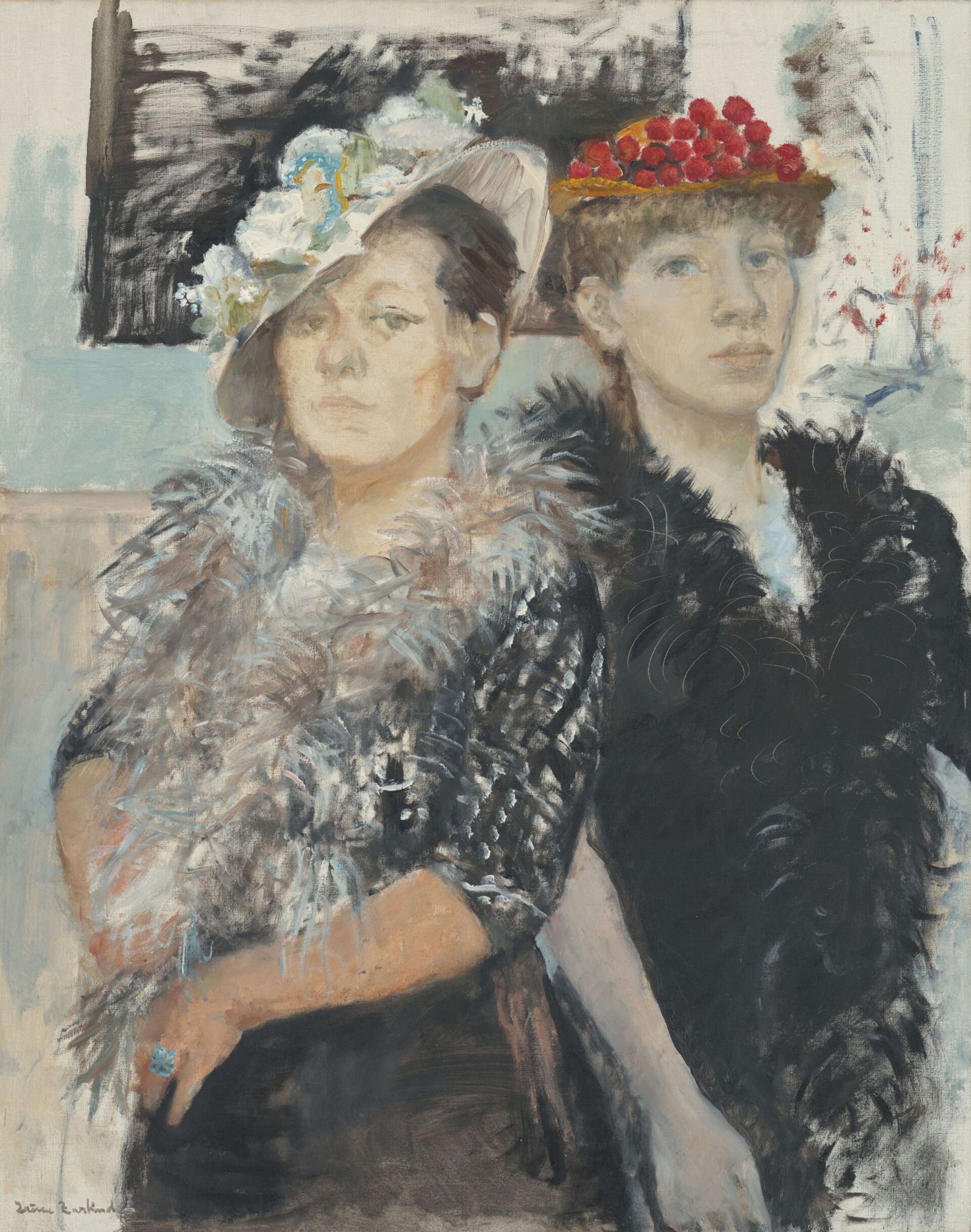
Female homosexuality was connected with friendship early on. This is evident in literature, titles of works, and the historic descriptions of relationships between women, such as the 18th-century term “romantic friendship” or popular 19th-century expression “sentimental friends.” Works from the early 20th century, on the other hand, show that the concept of friendship during this period fulfilled a double function: it served both to conceal homosexuality and to hint at it. Depictions of so-called friends, at times explicitly erotic, show that the intimacy of such relationships was by no means always a secret.
Aristide Maillol,
Le coureur cycliste
(1907–1908)
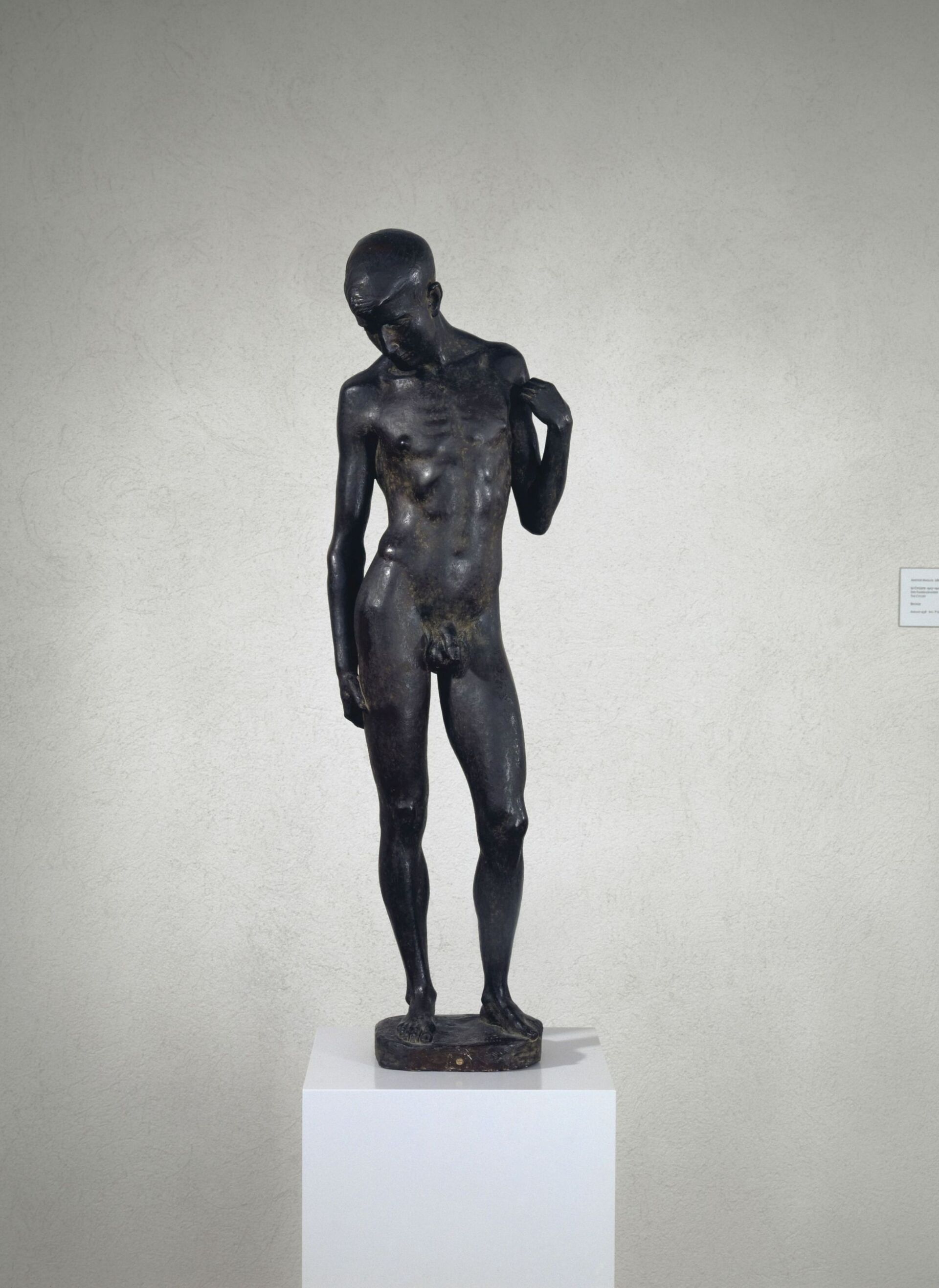
According to his diaries, the author, art collector, and patron Harry von Kessler (1868–1937) was fascinated by the physical appearance of his lover Gaston George Colin (1891–1957). Colin, a racing cyclist and jockey, embodied the slim, athletic physique that corresponded to the homoerotic ideals of his time. During a joint trip to Greece with the French artist Aristide Maillol (1861–1944), Kessler expressed the wish for a life-size marble statue of Colin. Other sources report that he wanted a bronze modeled after the young Narcissus. While Maillol devoted many hours to the commission, Kessler documented the work’s creation through photographs and written notes. With his downcast gaze and weight shifted onto one leg, the sculpture recalls ancient depictions of the mythological god Apollo. For Kessler, ancient Greece served as a model because sexual relations between men and male youths were socially anchored and widely accepted. Against the backdrop of the repression of homosexuality in the 19th century, the naturalness of same-sex desire in antiquity appeared to many as an ideal. During the trip, Maillol allowed himself to be guided by his patron’s aesthetic preferences. In Le coureur cycliste (Racing Cyclist) he stages the male body as a classical ideal of beauty and strength.
Arnold Böcklin,
Sappho (1862)
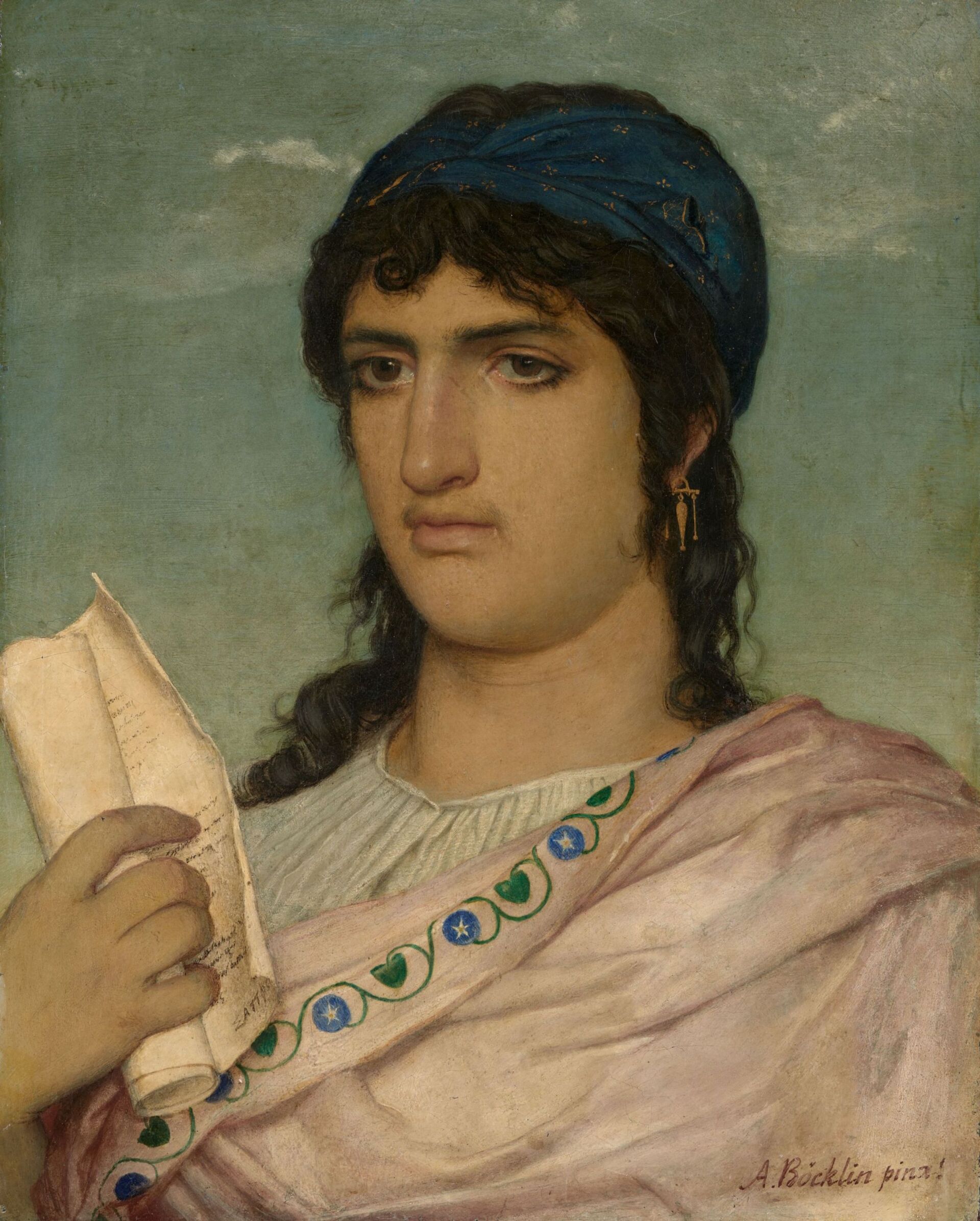
“Someone, I say, will remember us in time to come.” – Sappho (ca. 630–570 BC)
The Ancient Greek poet Sappho (c. 630–570 BC) remains to this day the epitome of desire between women: her name gave rise to the term “sapphic,” and her place of origin, Lesbos, to “lesbian.” In the 19th century, violets were considered a symbol of female homosexuality, following the poet Sappho, who mentioned them in her poetry.
Ottilie Wilhelmine Roederstein,
Self-Portrait with a Red Cap (1894)
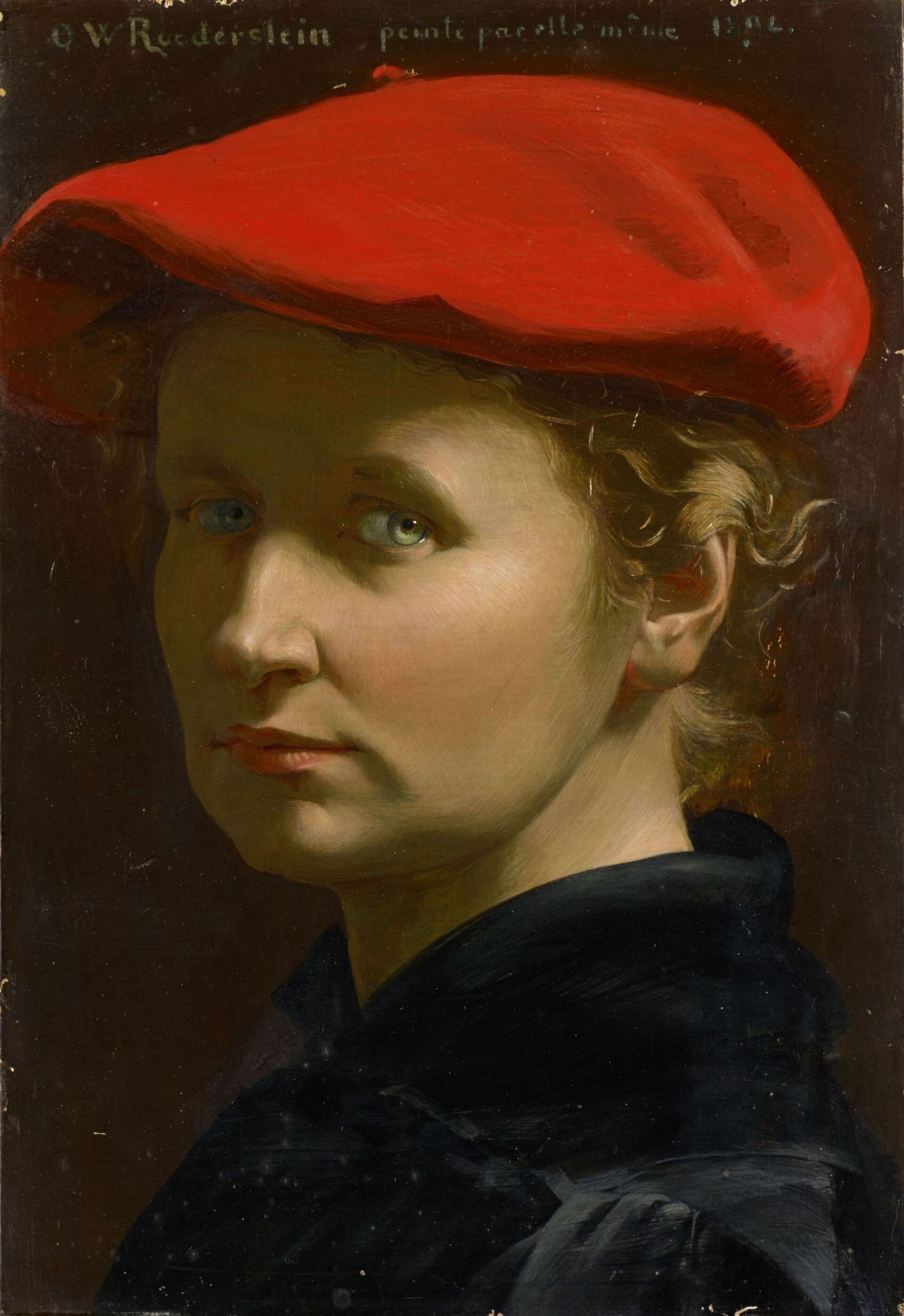
With a penetrating gaze, the Swiss painter Ottilie W. Roederstein (1859–1937) looks directly at her viewer in this self-portrait. Her turned posture, the strong contrasts, the dramatic lighting, and intimate scale recall works in European portraiture from the 15th to the 17th centuries. The signature at the top of the image, “O. W. Roederstein peinte par elle même 1894” (O. W. Roederstein painted by herself) — reinforces this claim, as does her attire. The red cap refers to Rembrandt van Rijn’s (1606–1669) famous self-portrait from 1660, while the beret was also commonly worn by artists of her own time. By adopting this visual language, Roederstein asserts her identity as a professional artist rather than conforming to prevailing women’s fashion. This work, which is today part of the Kunstmuseum Basel collection, was first presented at the Salon of the Société Nationale des Beaux-Arts in Paris in 1894. It is considered to be Roederstein’s first publicly exhibited self-portrait. Today, over 80 additional self-portraits are known. The repeated return to her own image reflects an intense exploration of artistic identity at a moment when women’s professional visibility was still contested. Despite structural obstacles, Roederstein and her partner Elisabeth H. Winterhalter (1856–1952) established themselves with remarkable independence: Roederstein was among the most successful artists in Switzerland, while Winterhalter was the first female surgeon in Germany. They lived together as a couple, shared a household and were financially independent—an arrangement that defied the social conventions of their time.
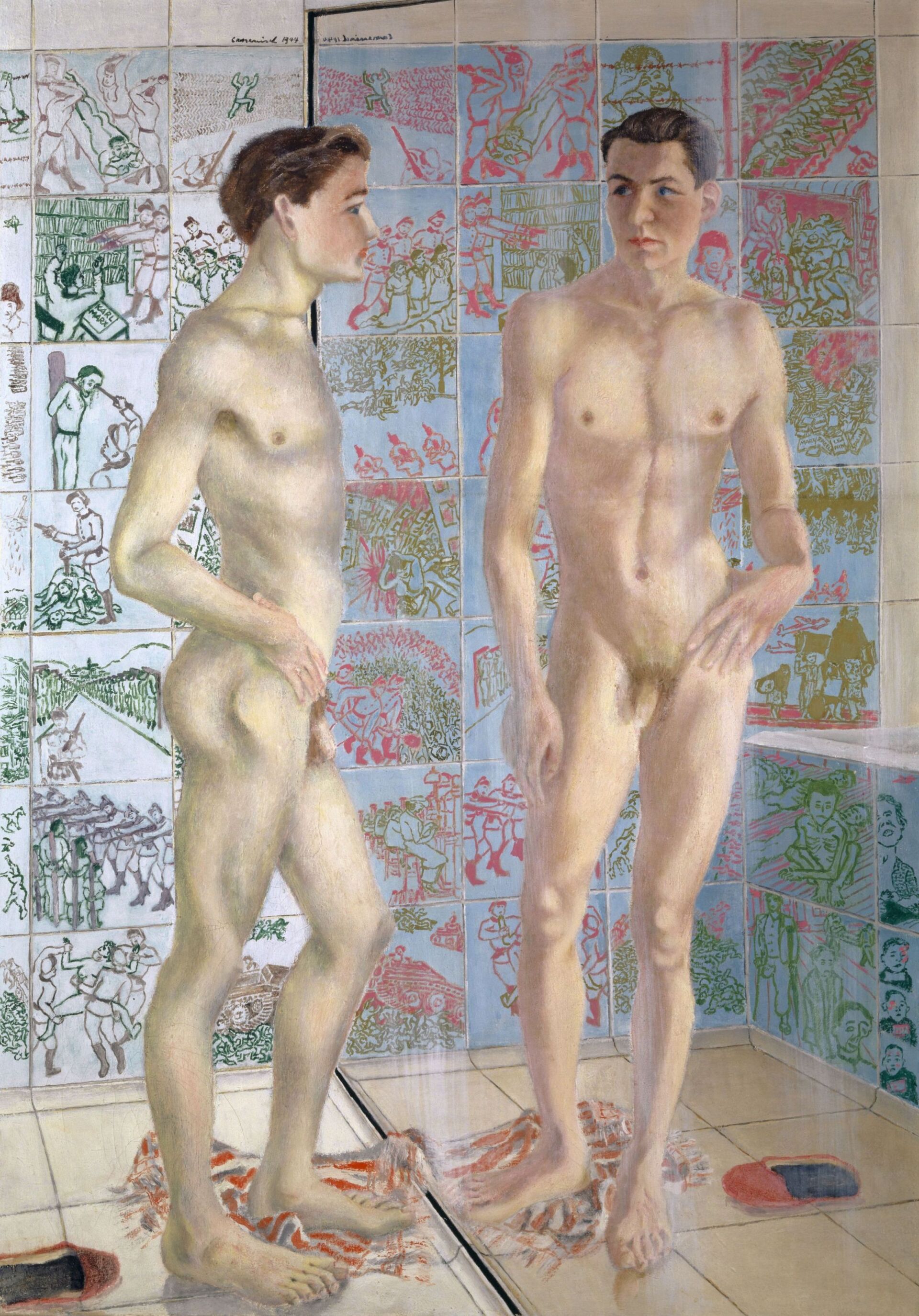
Paul Camenisch,
Schweizer Narziss (1944)
An initial interpretation of Swiss artist Paul Camenisch’s (1893–1970) Schweizer Narziss (Swiss Narcissus) suggests that the artist has transposed the ancient myth of Narcissus into a contemporary bathroom setting. Like the mythological figure, this Narcissus also directs his gaze exclusively at himself. He turns his back on the atrocities of the Second World War, which appear depicted on the surrounding tiles. In doing so, Camenisch criticizes Switzerland’s indifference during the war years, which was primarily concerned with its own affairs—self-absorbed, like Narcissus. But the work also allows for another reading. Long before the term “homosexual” entered common usage, same-sex love was associated with the myth of Narcissus. The psychoanalyst Sigmund Freud (1856–1939) also connected homosexual desire with narcissism. Seen through this lens, Camenisch’s painting functions as a double mirror: it not only reflects Switzerland’s self-centered attitude but also the precarious position of homosexuals amid the rise of fascism in Europe. Despite the comparatively liberal legal situation in Basel from 1919 and throughout Switzerland from 1942, the situation for homosexual people remained tense. The registering and monitoring of homosexuals by police would have facilitated Nazi persecution in the event of an occupation of Switzerland. The social situation contributed to the suppression of homosexuality into secrecy. This forced retreat into private space can also be discerned in Camenisch’s Schweizer Narziss.
The exhibition The First Homosexuals: The Birth of New Identities 1869–1939, on view from March 7 to August 2, 2026, at the Kunstmuseum Basel explores the early emergence of queer visibility in art. The exhibition traces how new ideas about sexuality, gender, and identity developed following the first public use of the term “homosexual” in 1869.