Böcklin
Beyond the Myth
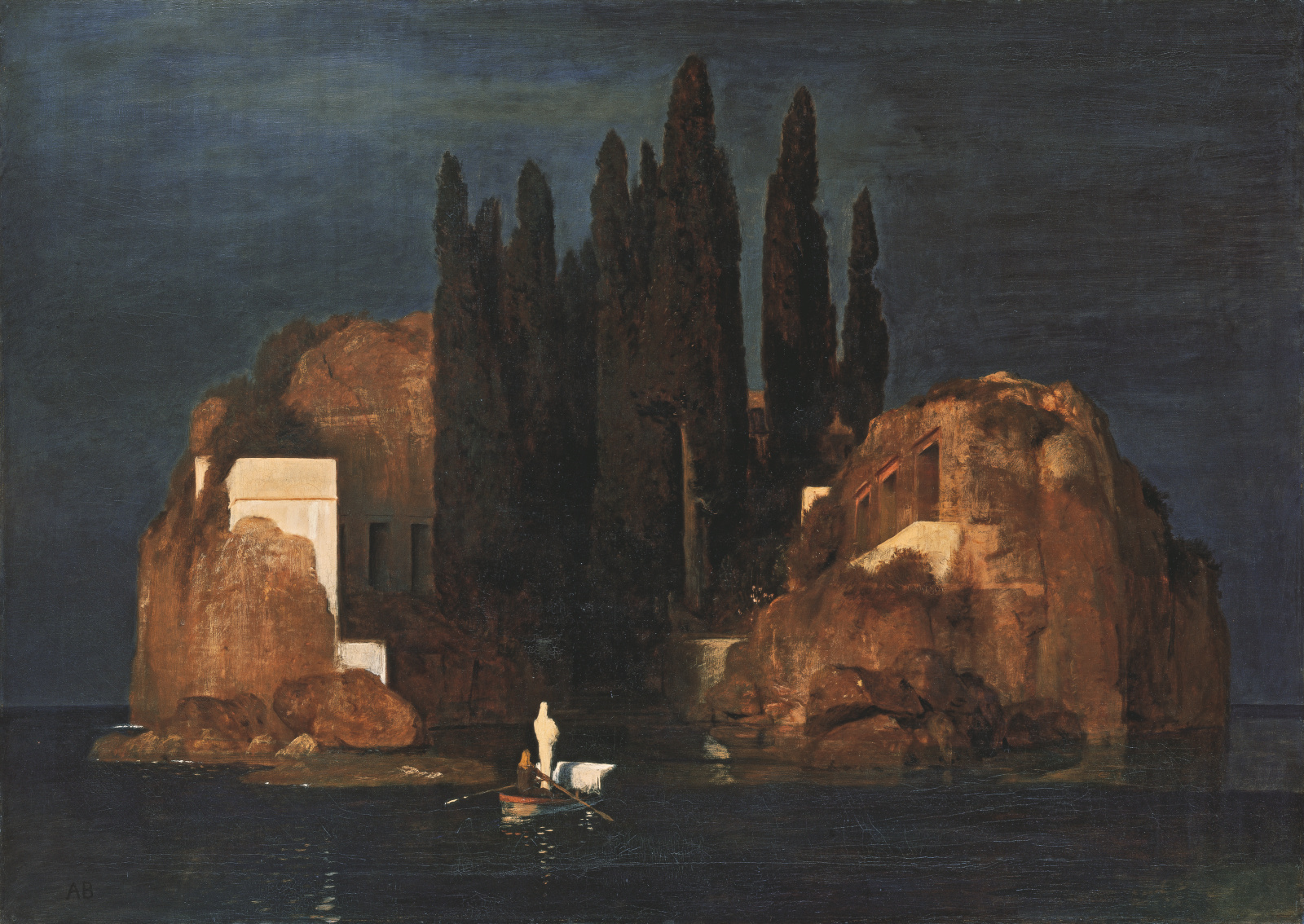
On occasion of Arnold Böcklin’s bicentennial, the Kunstmuseum Basel dedicates a major exhibition to the Basel-born painter. Presenting around 150 works, the show, which is scheduled to open in the fall of 2027, will offer insight into the fascinating oeuvre of one of Switzerland’s foremost artists of the nineteenth century. One highlight of the exhibition will be the first and likely only gathering of the four extant versions of the artist’s iconic Isle of the Dead, which are now in Basel, Berlin, Leipzig, and New York.
Luminous colors, fabulous creatures, eerie and fantastical landscapes, and haunting portraits: Arnold Böcklin created a pictorial world unlike that of any other artist of his time. Born in Basel on October 19, 1827, the painter, sculptor, and aviation enthusiast died in Fiesole, Italy, in 1901. The Kunstmuseum Basel now houses the largest and most important collection of his works. His best-known motif—one of the most famous landscape paintings in history and an icon of Symbolism—is the mystical Isle of the Dead. The five versions the artist painted between 1880 and 1886 still rank among the most enduringly powerful works of nineteenth-century art. The first of his versions is in the Kunstmuseum’s collection.
Initiated by the Kunstmuseum Basel and produced in cooperation with the Alte Nationalgalerie, Staatliche Museen zu Berlin, the exhibition Böcklin: Beyond the Myth explores aspects of Böcklin’s art that have received comparatively little attention—beyond the myth that was woven by motifs like the Isle of the Dead (1880–1886), Pan in the Reeds (1858), and The Sacred Grove (1886) as well as the fame that Böcklin won already in his lifetime. His daring use of color as well as the psychological potential of his later compositions were wildly influential and inspired not only well-known Surrealist artists such as Max Ernst, Giorgio de Chirico, and Salvador Dalí, but also young artists of his own time like Clara von Rappard. Böcklin’s love of experimentation speaks from his flight studies, but also from his choice of materials and support media, which will be subjected to closer scrutiny in preparation for the exhibition. His ambivalent relationship with the art market and the public comes to the fore in his relationship with the German art dealer Fritz Gurlitt (1854–1893) as well as in sometimes deliberately provocative artistic decisions. The focus on Böcklin’s “bizarreries”—as contemporary art critics put it—adds new facets to the picture painted by existing Böcklin scholarship.
The exhibition moreover boasts a coup that has never been achieved before: it will unite the four surviving versions of Isle of the Dead—a sensation that is unlikely to be repeated, as the collections holding three of these eminent paintings ordinarily do not allow them to travel and are making an unprecedented exception for the occasion. Even Böcklin himself never saw the works together. The fifth version was destroyed during the Second World War. The gathering of the four paintings will enable visitors to scrutinize their similarities as well as distinctive features and study their context. The presentation will reveal how one of the most famous motifs in the history of art came into being, why it still captivates beholders today, and why it—much like Böcklin’s oeuvre as a whole—has prompted such a complex history of responses from various audiences.
A major section of the accompanying catalogue will be a first-ever comprehensive account of how Böcklin and his art were perceived by contemporaries and posterity, an unusual history that moreover reveals marked differences between Germany and Switzerland: even in his lifetime, critics used Böcklin’s works to negotiate social divisions, establishing divergent lines of interpretation. Progressive artists found a vital source of fresh ideas in his work; in Germany, meanwhile, a strand of reception steeped in nationalism took hold, opening the door to vehement accusations of anti-modernity that continue to resonate today. The book also provides context for Adolf Hitler’s admiration of Böcklin. The exhibition catalogue, bringing together contributions by eminent scholars of 19th-century art, will illustrate the extent to which these interpretations attached themselves to Böcklin’s work regardless of his artistic intent, and turned the artist into a figure of inspiration to some and controversy to others.
This exhibition "Böcklin: Beyond the Myth" was initiated by the Kunstmuseum Basel and is realized in cooperation with the Alte Nationalgalerie, Staatliche Museen zu Berlin..